SDG 13: Climate Action
SDG 13:
CLIMATE ACTION
Take urgent action to combat climate change and its impacts.
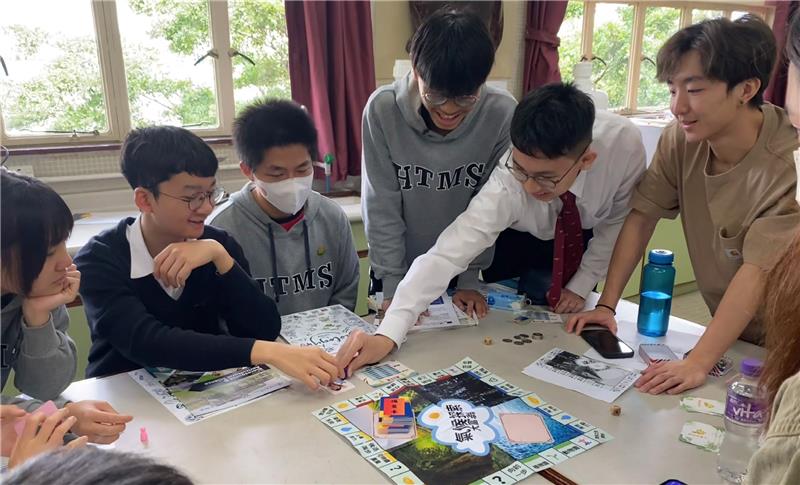
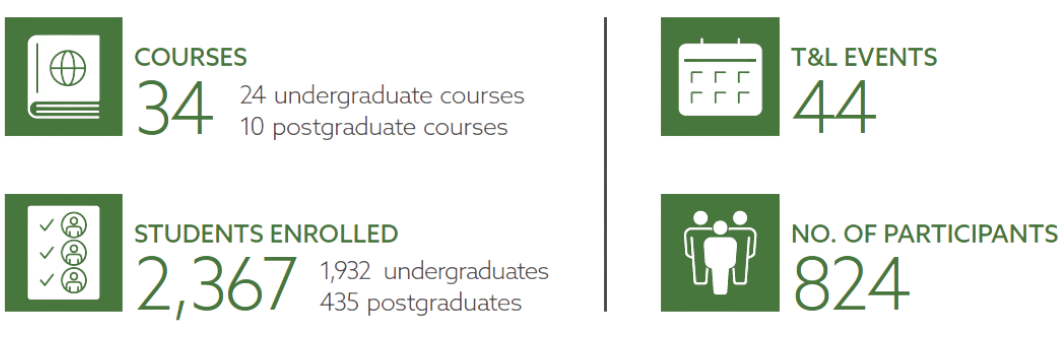
In the course “Sustainable Urban Environment” led by Dr Chan Wai-Yee of the Department of Biology, students developed educational materials and led workshops for over 100 secondary students from Heung To Middle School and Ho Ngai College, sponsored by Sik Sik Yuen. A key component was interactive board games simulating real-world climate challenges, engaging students in problem-solving and encouraging actionable solutions from simple behaviours to community and technological interventions. This hands-on approach enhanced climate literacy, environmental awareness, and social responsibility among participants. By fostering critical thinking and collective action, the course empowered youth with concrete tools to address climate change.
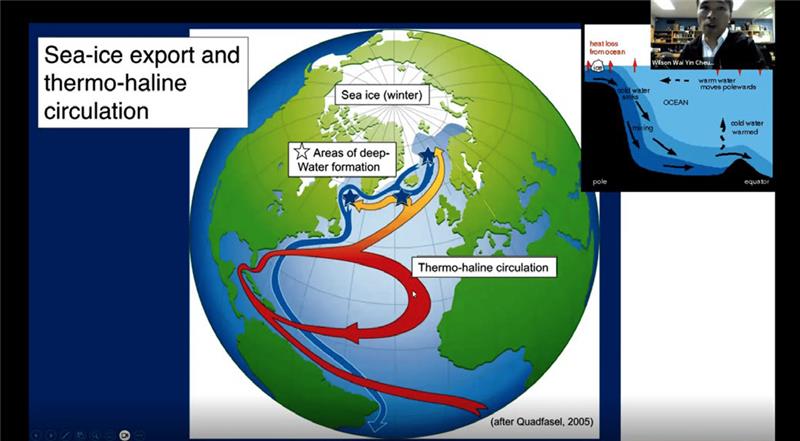
In the General Education course “Racing against the Clock: Saving Environment for Future Generations”, two distinguished speakers brought climate science to life for 150 students. Mr Lam Chiu-ying, former Director of the Hong Kong Observatory, presented the causes, risks, and local-to-global impacts of global warming. Mr Wilson Cheung, a HKBU alumnus and polar expedition expert, shared vivid accounts from over 1,000 days in the Arctic, highlighting glacier retreat, warming trends, and their effects on water security, ecosystems, and livelihoods. Their insights enhanced students’ climate literacy and offered practical strategies such as sustainable consumption, community advocacy, and pathways to net-zero emissions. This dynamic learning experience fostered accountability and empowered students to contribute actively to resilient, low-carbon, and sustainable future.
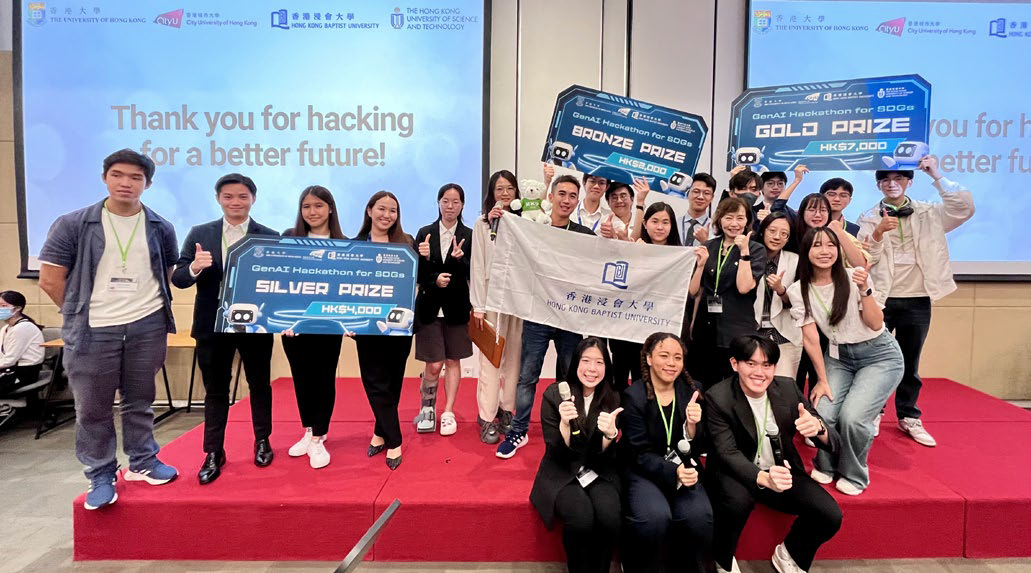
Inter-university GenAI hackathon drives climate action
The GenAI Hackathon for SDGs, co-organised by HKBU, HKU, HKUST, and CityU in late 2024, engaged over 250 students in 71 teams to develop AI-driven solutions addressing climate and sustainability challenges. An HKBU team won Second Runner-up for their AI-powered inventory management system aimed at reducing retail food waste and lowering greenhouse gas emissions. Other teams focused on climate action through projects like forecasting climate impacts on urban development, automating medication screening to promote circularity, and optimising food production to cut carbon emissions. This event fostered collaboration and empowered students to translate ideas into impactful solutions to mitigate global warming and build a climate-resilient future.
Academy of Geography, Sociology and International Studies
Authors: Fan WANG, Zifeng LU, Guangxing LIN, Gregory R. CARMICHAEL, Meng GAO*
*Corresponding author
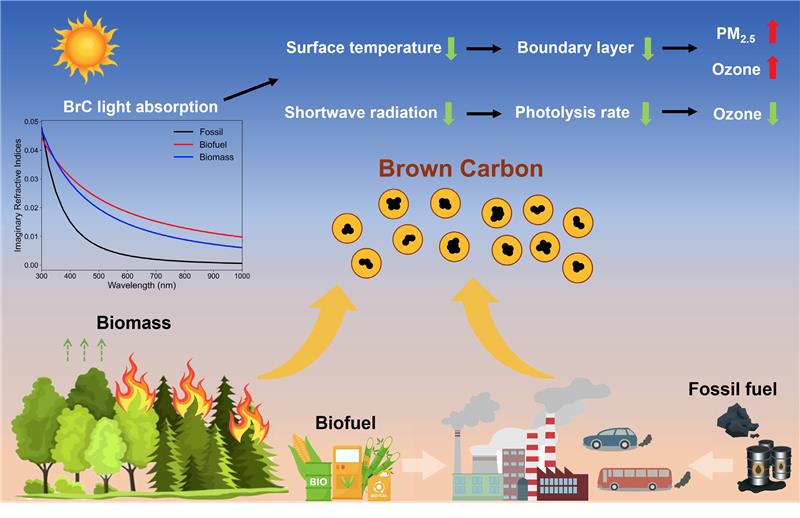
The study integrates a brown carbon absorption module into the regional coupled meteorology– chemistry model WRF-Chem to resolve source-dependent optical properties and assess climate and air-quality impacts across East Asia without relying on uncertain BrC emission assumptions, advancing regional climate action tools under SDG 13. Simulations show notable increases in aerosol absorption optical depth over organic-carbon hotspots and seasonal radiative forcing peaking in autumn over Southeast Asia at about 2–4 W m−2, altering surface energy balance and reducing surface temperature, boundary-layer height, and turbulent exchange rates. These meteorological changes weaken dispersion and modify photochemistry, generally raising PM2.5 and changing O3 heterogeneously, with increases in Southeast Asia and South China but decreases over East China depending on competing processes. By improving the representation of brown carbon in regional models and quantifying its climate–air-quality feedbacks, the work provides actionable evidence for mitigation and adaptation strategies aligned with SDG 13.
Global prevalence of compound heatwaves from 1980 to 2022
Department of Mathematics
Authors: Kun ZHANG, Jin-Bao LI, Michael Kwok-Po NG*, Zheng-Fei GUO, Amos P.K. TAI, Shu-Wen LIU, Xiao-Rong WANG, Jie ZHANG, Jin WU*
*Corresponding author
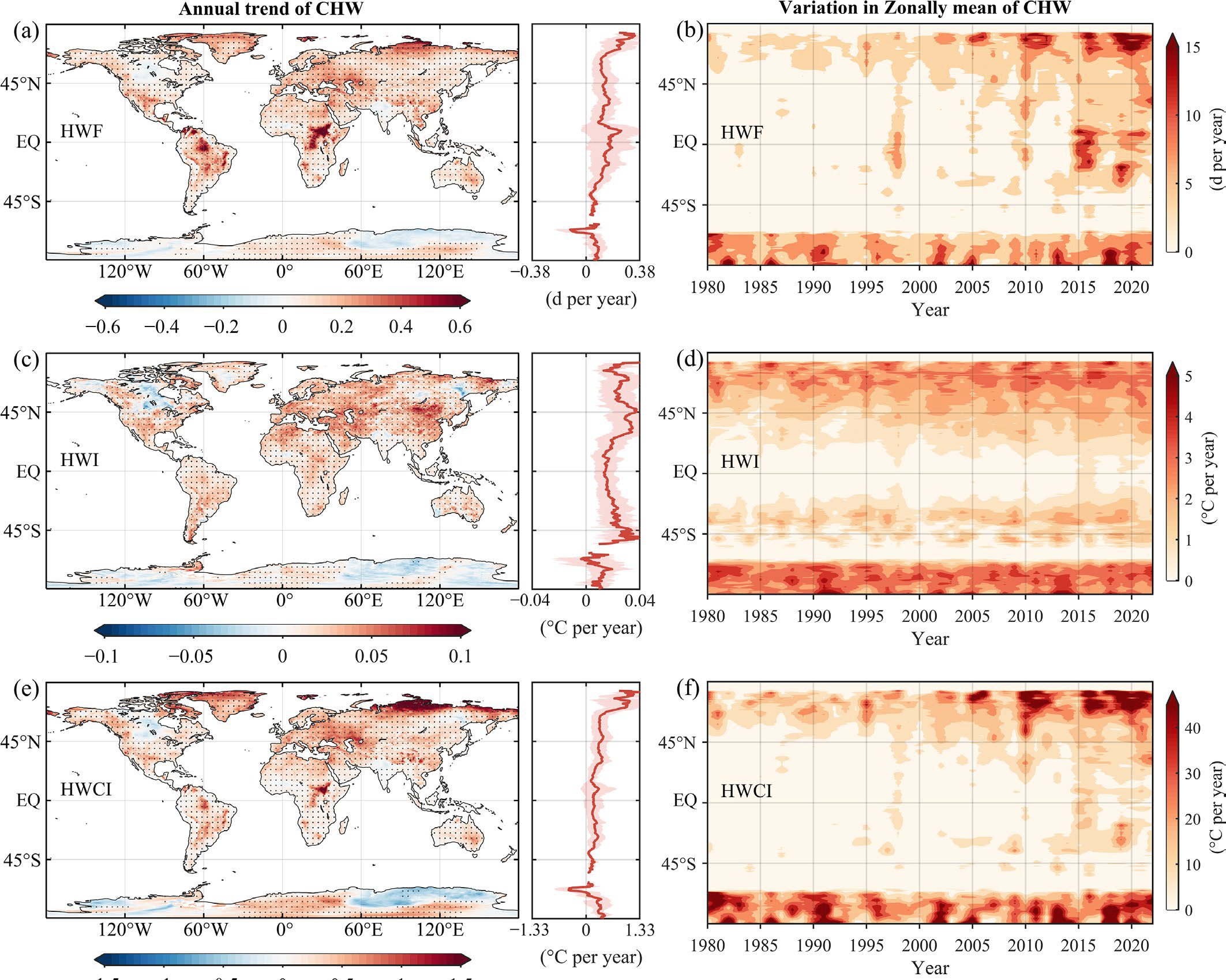
The study uses ERA5 Land temperatures from 1980–2022, corroborated by MERRA 2 and JRA 55, to detect and compare daytime, nighttime, and compound heatwaves (CHW) worldwide, revealing that compound heatwaves now dominate in frequency, intensity, and cumulative intensity. Globally, the annual cumulative intensity of compound heatwaves increased by 3.32 °C per decade—about four times the rise seen for daytime or nighttime events—while the Arctic and other high latitude regions experienced the strongest growth since the mid 2000s. The analysis also maps regional teleconnections, showing strong lagged associations with ENSO and PDO in the tropics that can inform early warning and preparedness. By identifying hotspots, drivers, and trends of the most harmful heatwave type, the work strengthens scientific capacity and supports resilience planning aligned with SDG 13.1 and 13.3. These insights can guide climate risk governance and adaptation strategies under the UN Climate Action framework.
HKBU is committed to combatting climate change through a structured policy framework and targeted strategies.
- Policy framework
The University has established various policies and guidelines to govern its sustainable development and operations. These include the Sustainability Policy, University Green Policy for Capital Projects and Major Addition and Alteration Projects for University Campus, Sustainable Procurement Policy, Sustainable Food Policy, Waste Management Policy . and the Carbon Neutrality Policy.
- Emission reduction targets
In 2019, HKBU established a five-year energy management plan to reduce greenhouse gas (GHG) emissions. The Carbon Neutrality Strategy Plan (2023) aims for a 50% reduction in Scope 1 and 2 GHG emissions by 2035/36 and achieving carbon neutrality for these emissions by 2044, which aligned with Hong Kong’s overall carbon neutrality roadmap.
- Decarbonisation strategies
The University has put in place decarbonisation actions that focus on energy saving and green buildings, green transport, waste reduction, and community engagement.
Gold Award at the Carbon Neutrality and Sustainability Award
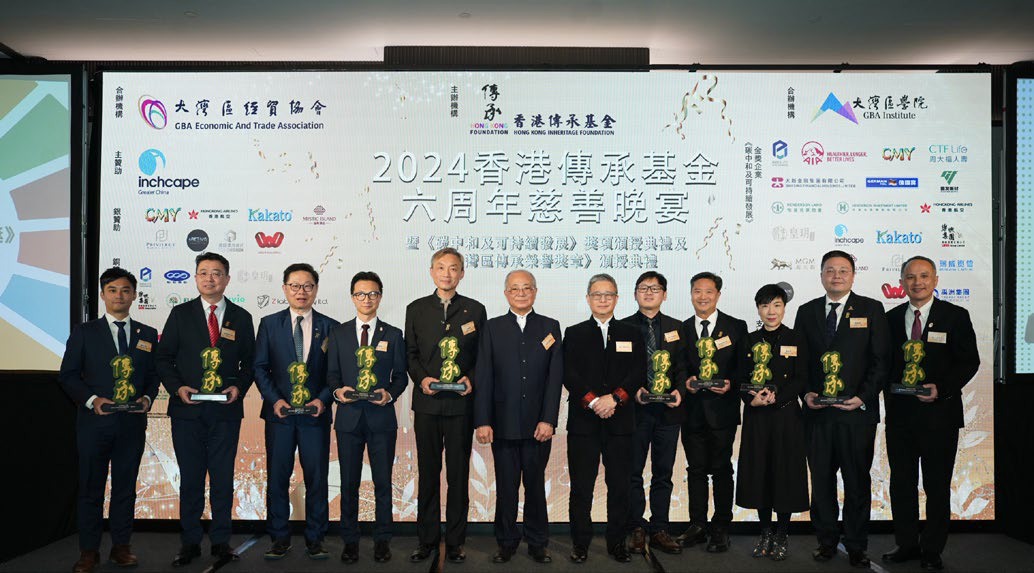
In December 2024, HKBU was presented the Gold Award at the Carbon Neutrality and Sustainability Award Ceremony, organised by the Hong Kong Inheritage Foundation at its 6th Anniversary Charity Gala. This award recognises the University’s achievements in sustainable development and highlights its commitment to social responsibility and environmental protection through the Foundation’s Carbon Neutrality and Sustainability Charter.
Campus sustainability initiatives
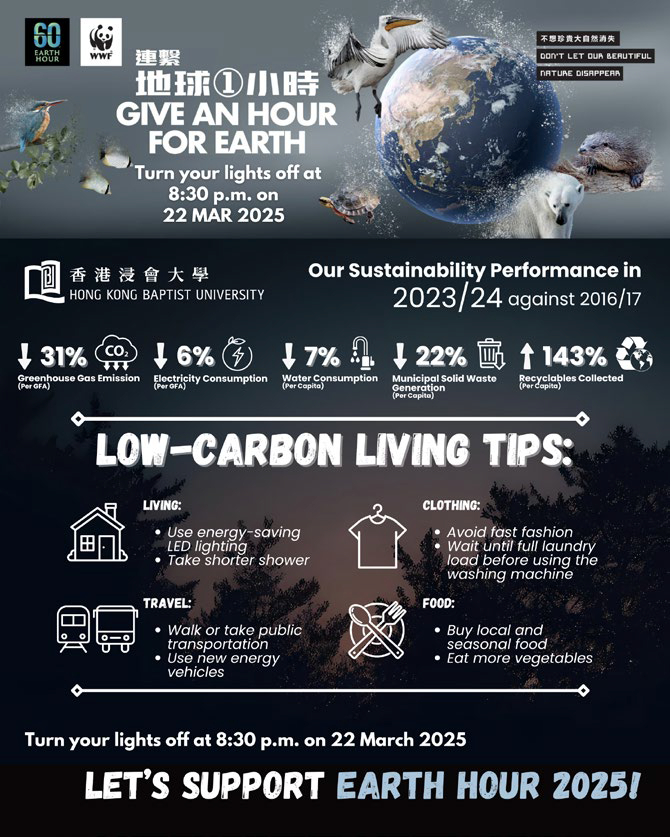
HKBU has been actively promoting sustainability on campus through various initiatives aligned with the need for urgent climate action. On 21 October 2024, the Library collaborated with the Estates Office to organise an interactive sustainabilitythemed learning event for students, showcasing HKBU’s sustainability contributions, including facilities and campus initiatives. Attendees learned to access scholarly materials on SDGs through the online database, enhancing their practical and research-focused understanding of sustainability and the University’s commitment to global responsibility. Building on this, HKBU participated in Earth Hour 2025 by switching off nonessential lights and appliances for one hour to reduce energy consumption and raise awareness of the importance of individual actions in combating climate change.
HKBU Sustainability Report 2024 - 2025