SDG 12: Responsible Consumption and Production
SDG 12:
RESPONSIBLE CONSUMPTION AND PRODUCTION
Ensure sustainable consumption and production patterns.
The General Education capstone experiential learning course, “Children as Consumers: Marketing to the Youth”, taught by Mr Wong Tak-hoi of the Department of Communication Studies, linked marketing practices to sustainability and responsible consumption. Students critically examined how advertising shapes the behaviour of children and youth, analysing branded content, decoding embedded ideologies, and assessing consumer socialisation, materialism, and privacy risks in the digital marketplace. Through case analyses of controversial advertisements, regulatory frameworks, and ethical standards, the course generated actionable recommendations that encouraged responsible production and marketing while curbing harmful targeting, stereotyping, and unhealthy or waste‑intensive consumption. Students translated their group research findings into practical guidance for marketers, educators, and policymakers, promoting sustainable lifestyles and business practices as well as informed consumption choices.
Exploring sustainable recycling at Hong Kong’s MilMill
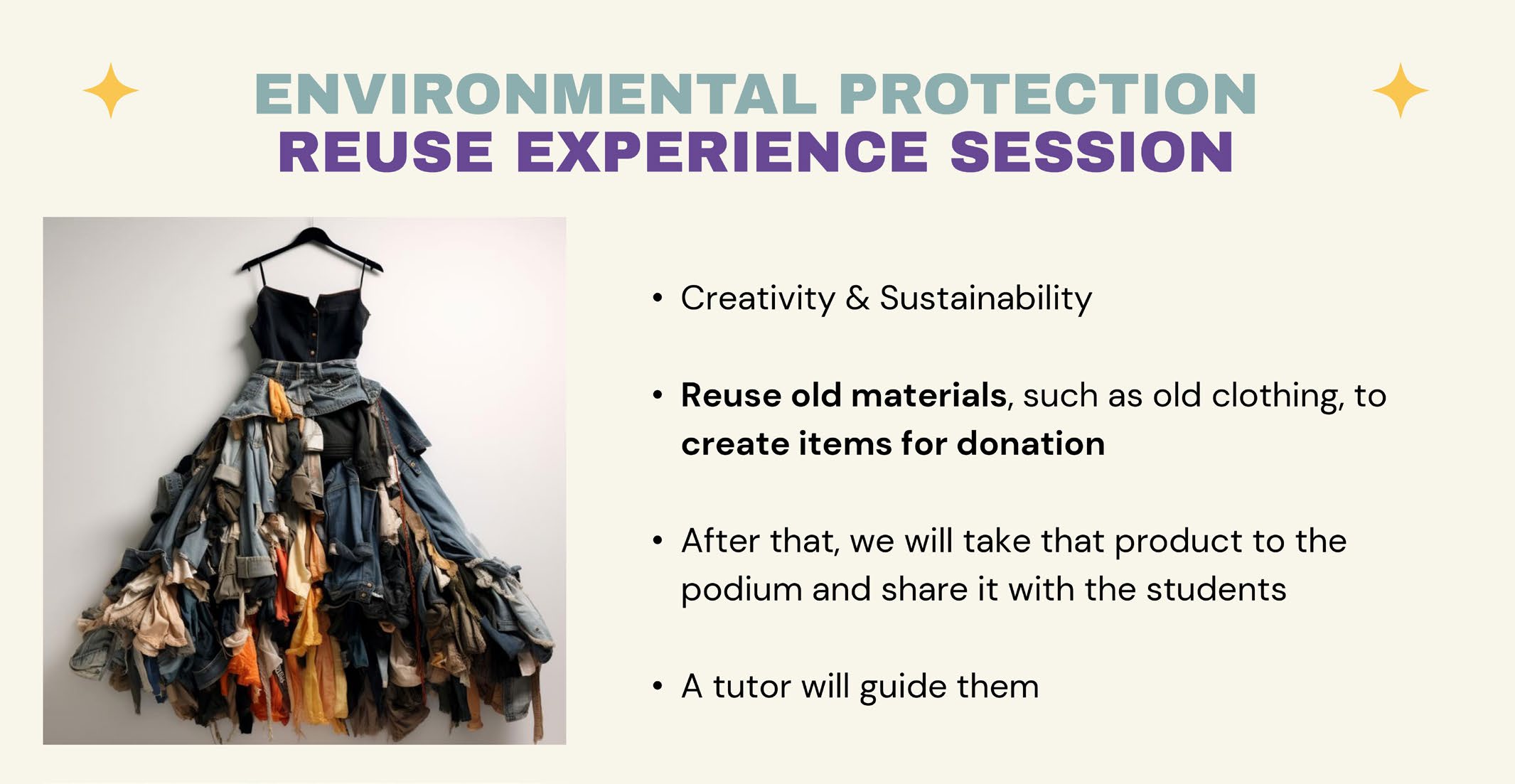
The Green Quest ambassadors from the Leadership Qualities Centre organised an educational tour to MilMill, Hong Kong’s first pulp mill and environmental education centre, aiming to inspire sustainable habits and environmental protection.
During the visit, a group of 19 students delved into innovative recycling practices and explored the pioneering approaches MilMill has adopted in Hong Kong. Students gained hands-on experience making paper from recycled materials and learned the importance of waste reduction, smart consumption, and recycling.
The tour provided students with valuable insight and a deeper appreciation for sustainability. The experience also equipped them with the knowledge and motivation to help reduce environmental impact, paving the way for a greener and more responsible future.
Department of Management, Marketing and Information Systems
Authors: Yunhui HUANG*, Ke ZHANG, Xiaoyan DENG, Qiang ZHANG
*Corresponding author
Fast fashion, characterised by trendy, disposable clothing produced through unsustainable practices, has transformed the industry but at a significant environmental and social cost. This research argues that fast fashion’s business model—emphasising quick trends, short product lifespans, and resource-intensive production—signals a short-term consumer focus, leading to perceptions of low self-control. It highlights issues like massive textile waste (92 million tons annually), greenhouse gas emissions comparable to major economies, and labour exploitation in supply chains. By linking consumption habits to self-control inferences, the study reveals downstream effects, such as reduced suitability for endorsements or jobs requiring discipline. Relevant to SDG 12, it promotes awareness of responsible consumption, encouraging sustainable alternatives like eco-friendly lines or reduced disposability to minimise waste and foster long-term environmental and social equity. This contributes to global efforts in sustainable production and mindful consumer behaviour.
The NeRF Signature: Codebook-aided watermarking for neural radiance fields
Department of Computer Science
Authors: Ziyuan LUO, Anderson ROCHA, Boxin SHI, Qing GUO, Haoliang LI, Renjie WAN*
*Corresponding author
This research develops NeRF Signature, a watermarking technique for Neural Radiance Fields (NeRF) that embeds invisible copyrights into 3D models to protect intellectual property without changing the model’s structure. It improves imperceptibility, robustness against tampering, and efficiency by using a codebook for signature management, allowing updates without retraining. This promotes responsible digital production by reducing unauthorised copying, which minimises wasteful resource use in recreating or litigating over digital assets. Aligning with SDG 12, it encourages sustainable practices in content creation industries like virtual reality and design, fostering efficient resource allocation and reducing environmental impacts from excessive digital production. By securing 3D assets, the work supports accountable consumption in the digital economy, enabling creators to share innovations safely while cutting down on redundant efforts and promoting eco-friendly technological advancement.

The University upholds ethical sourcing through its Sustainable Procurement Policy and the Policy on Anti-slavery and Equivalent Rights for Outsourced Workers. The policies ensure all procured products and services meet ethical standards. Suppliers who support fair labour practices and promote environmental sustainability are prioritised. By employing transparent sourcing practices and thorough tender evaluations, the University actively supports ethical businesses and non-profit organisations, fostering positive social impacts across its procurement activities.
Hazardous substance management
Effective management of hazardous substances is crucial for safety, environmental sustainability, and regulatory compliance at the University. HKBU’s policy ensures a safe environment while minimising exposure to hazards.
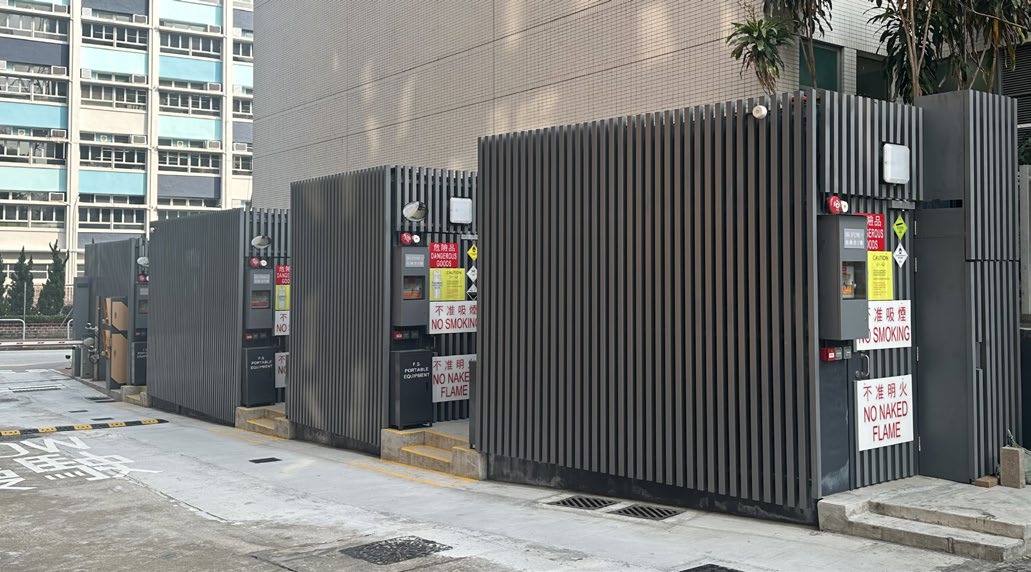
- Dangerous goods management system
The system uses barcode and Radio Frequency Identification (RFID) technology to monitor chemical logistics, covering procurement, delivery, labeling, distribution, storage, and disposal, enabling real-time tracking to ensure safety compliance. The University also partners with licensed waste collectors for safe disposal of hazardous waste.
- Storage facilities for dangerous goods
The University currently operates two dangerous goods storage locations: one at the Ho Sin Hang Campus and a new facility at its Baptist University Road Campus. Additional storages are under construction, set to open in 2026.
- Training and awareness
To ensure the proper handling of dangerous goods, comprehensive training programmes for staff and students are provided, including laboratory safety training for undergraduate students at the start of the first semester. New professional safety training materials for Research Postgraduate students will be available in 2026, further supporting advanced research safety needs.
- Laboratory inspections
Regular laboratory inspections are conducted to enhance safety and foster compliance with safety protocols across all facilities.
Reducing plastic consumption and disposable items
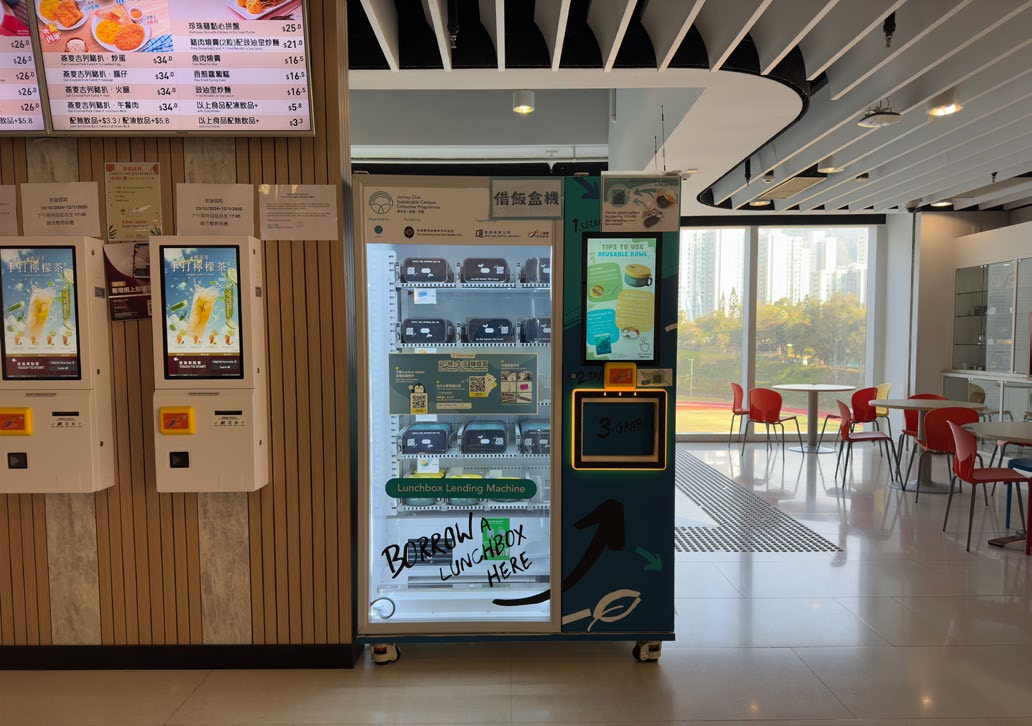
- Joint-U Lunchbox Lending Programme
The programme continues to be promoted through various social media campaigns. By the end of November 2024, over 35,000- plus single-use disposables were diverted from landfills by users across eight campus communities through the lending of reusable containers. User surveys and process reviews have resulted in enhancements to the system, including the introduction of new reusable bowls and cutlery options in October 2024.
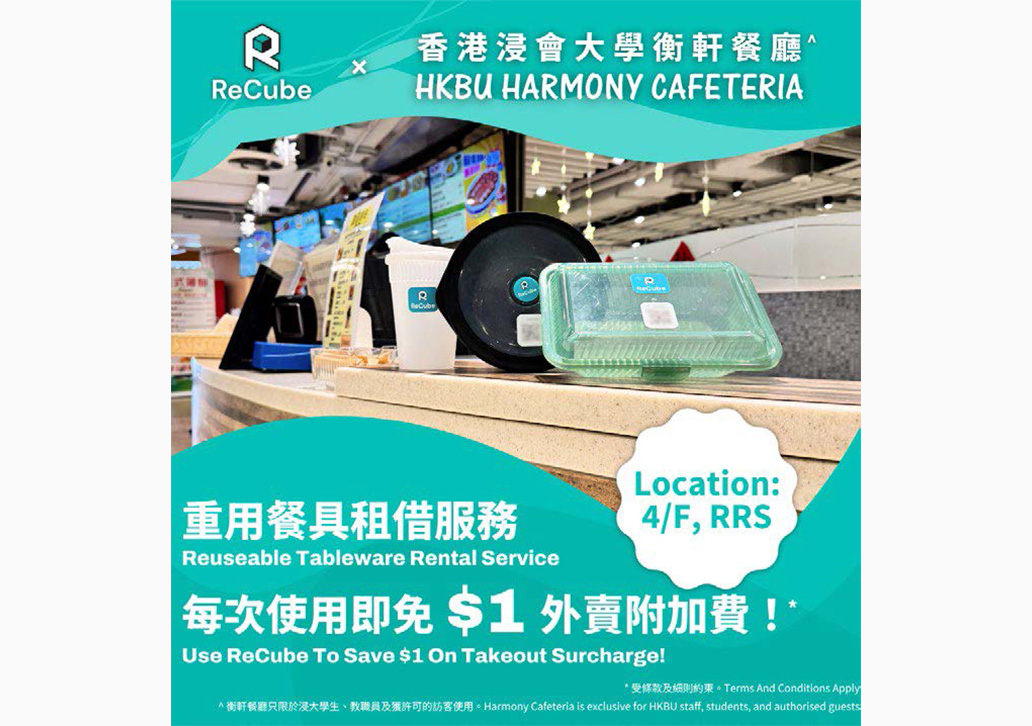
- Recube - Lending Service of Reusable Meal Container
An environmental social enterprise, ReCube, has extended its tableware lending service to the Ho Sin Hang Campus catering outlets in September 2024, further reducing disposable cutlery usage.
- Instagram Reels Competition
The “#BringYourOwn: I Choose Reuse” Instagram Reels competition took place in the summer of 2024 to reduce landfill waste by encouraging students to use reusable lunchboxes. The campaign successfully raised awareness, achieving significant reach, with winning entries garnering over 12,000 views.
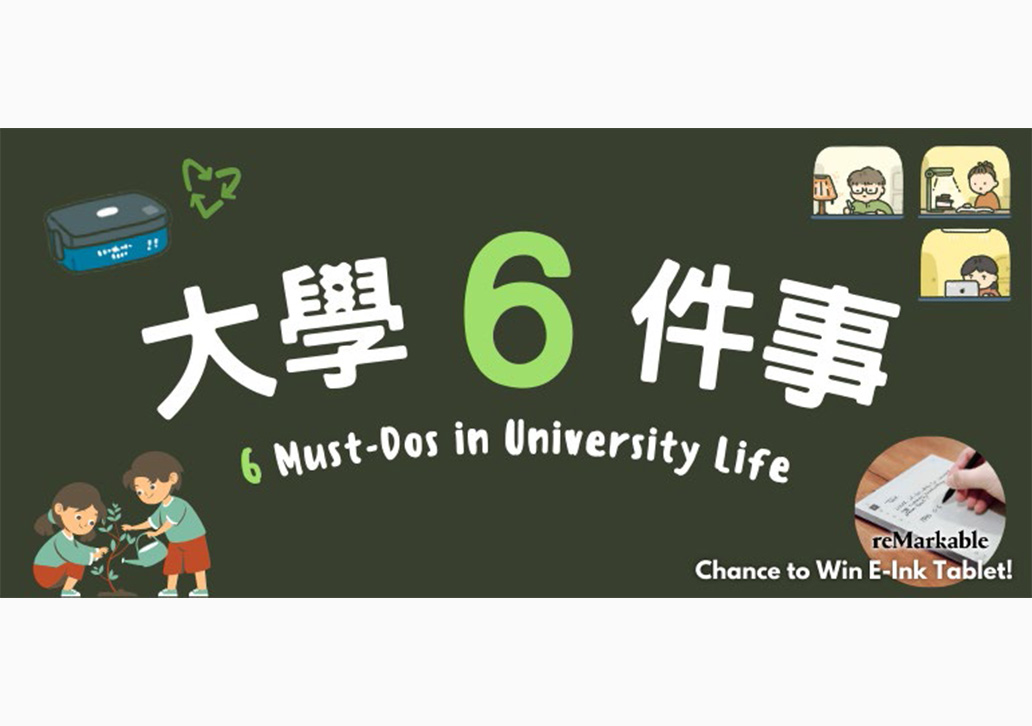
- 6 Must-Do’s of University Life
Launched at the start of the 2024-25 academic year, the campaign promoted key sustainable habits among students, such as smart takeaway with reusable containers, energy-efficient residential hall management, healthy routines aligned with daylight hours, and mindful water usage during showers. Students were incentivised through Carbon Wallet Points redeemable for green rewards.

Ethical procurement and supplier engagement
HKBU advances ethical sourcing via its Sustainable Procurement Policy and Policy on Anti-slavery and Equivalent Rights for Outsourced Workers. These frameworks ensure products and services meet ethical criteria and favour suppliers that respect fair labour and environmental standards.
Sustainable waste management and recycling initiatives
Under the Waste Management Policy and the “Use Less, Waste Less” approach, HKBU has streamlined its recycling infrastructure, reduced landfill waste, and improved resource circulation. Since 2016-17, municipal solid waste per capita has fallen by 28%, while recyclables per capita have increased by 170%, reflecting sustained progress.
- Streamlining recycling infrastructure
All waste bins have been replaced with Green Pitch stations, which incorporate both waste and recycling bins, promoting proper sorting and disposal.

- Reward-based smart recycling programme
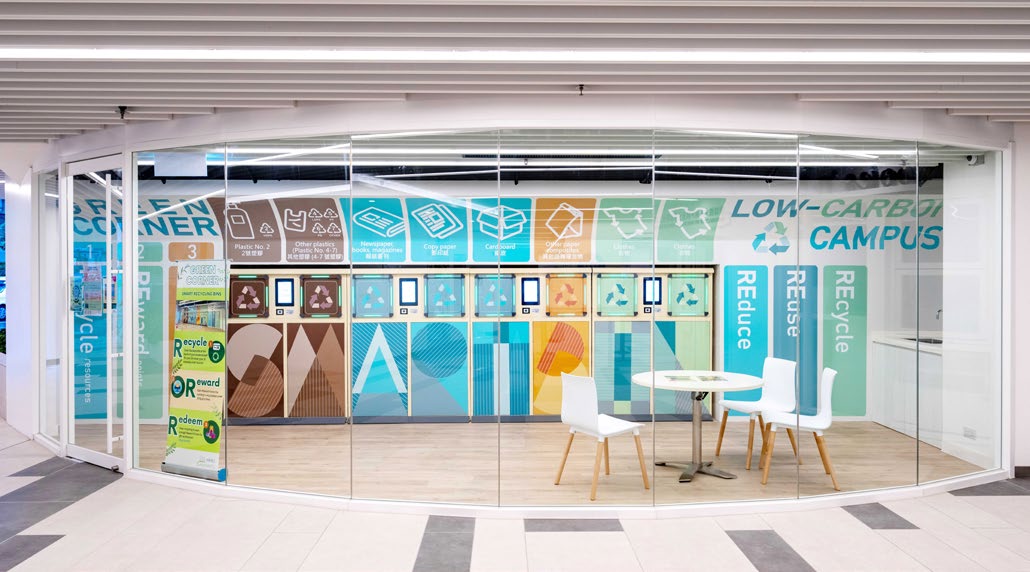
Launched in October 2023, the Green Corner features advanced recycling bins and a rewards system. Until June 2025, the Green Corner has collected over 3,600 kg of recyclables, demonstrating strong community participation.
- Reducing paper consumption
Since March 2024, paper towels have been removed from all campus restrooms, encouraging users to bring handkerchiefs or use hand dryers.
- Setting up of new reverse vending machine
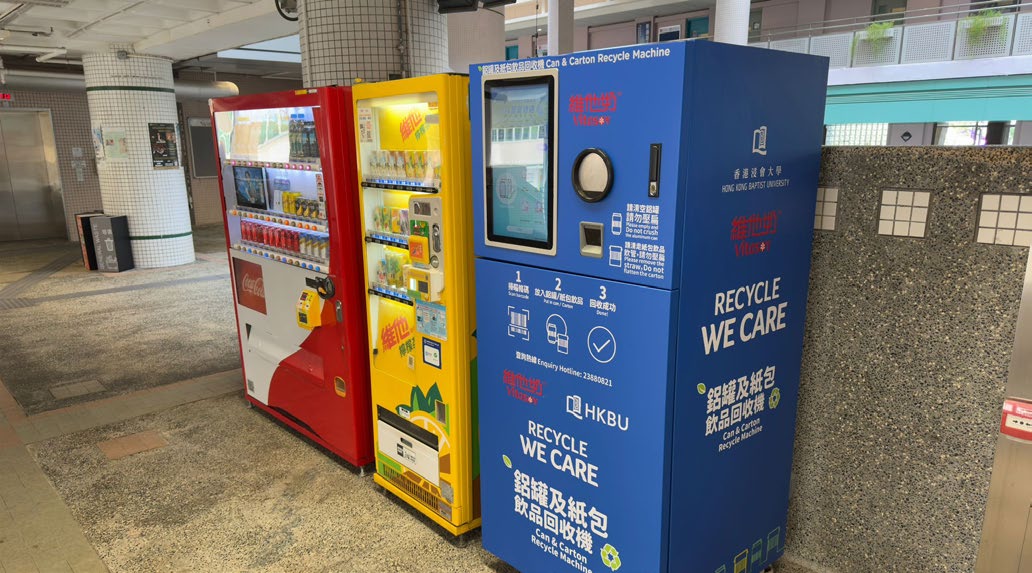
The new reverse vending machine is set up in Ho Sin Hang Campus to collect aluminium cans and drink cartons. The machine also provides a reward system, where users can redeem drinks coupon by recycling.
- Sustainability Leadership Programme – Cloth Swap Party
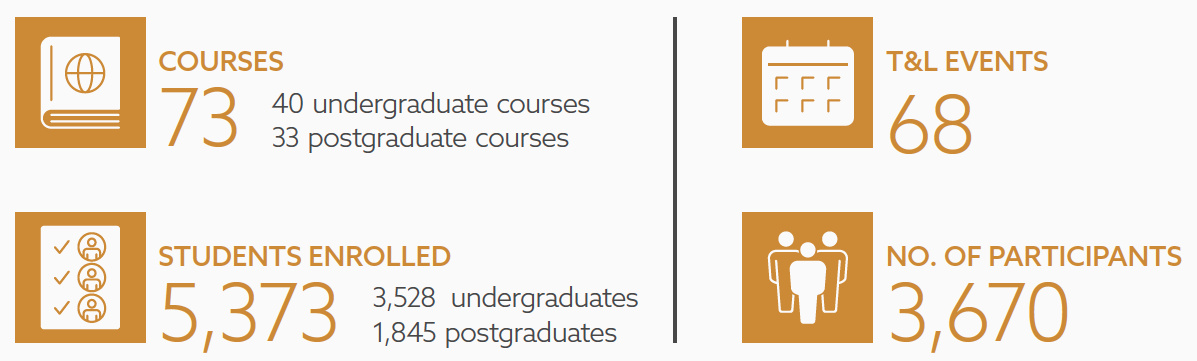
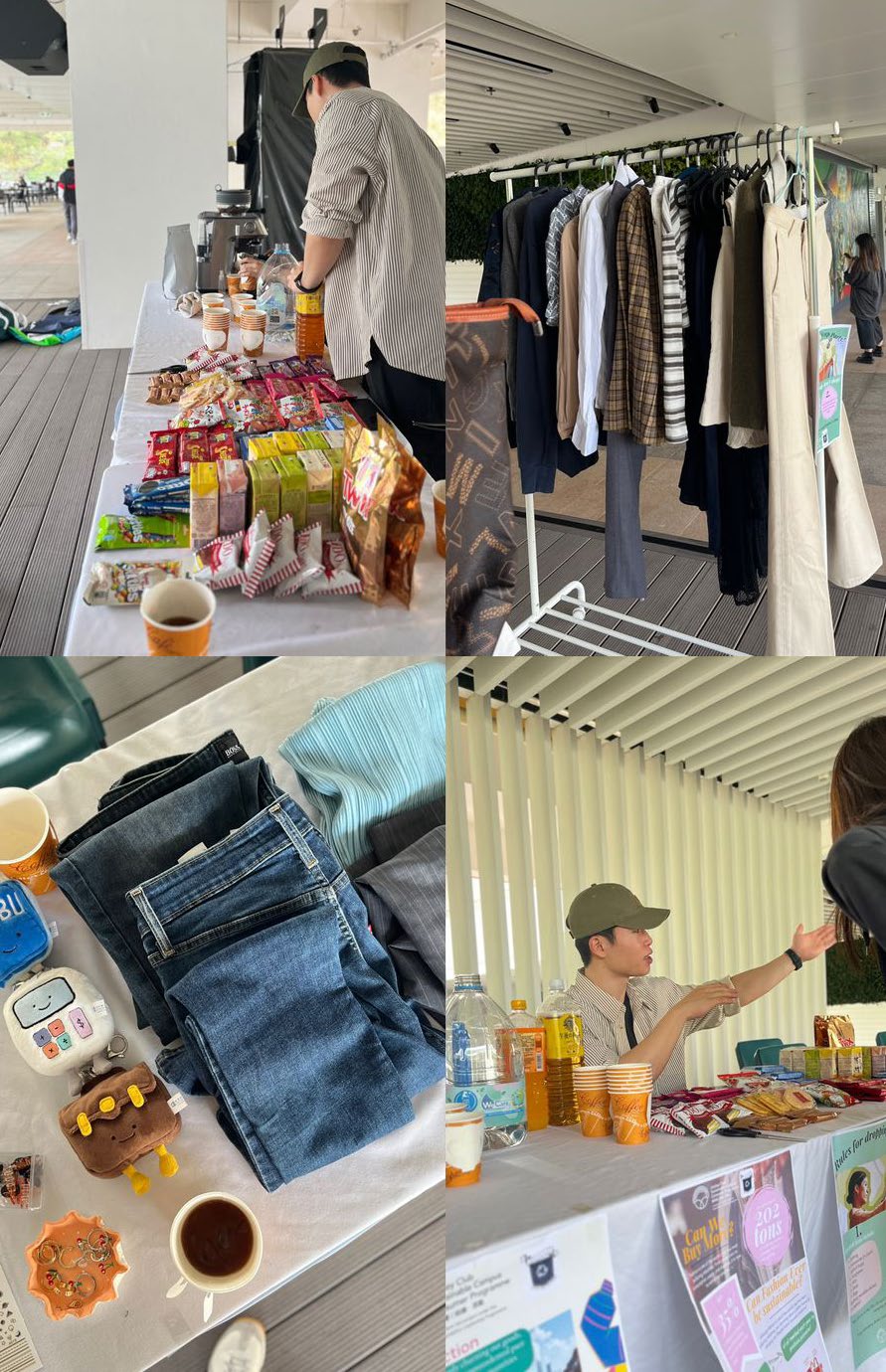
The Spring 2025 batch of sustainability leaders focused on “Rethink Clothing Consumption”. In collaboration with environmental organisations, HKRITA and CHAT, they implemented projects to collect and redistribute unwanted clothing, raising awareness about sustainability. The HKBU team successfully held a “Swap Party” in April 2025 to redistribute gently used clothing on campus.
- Zero-Waste Living Fair
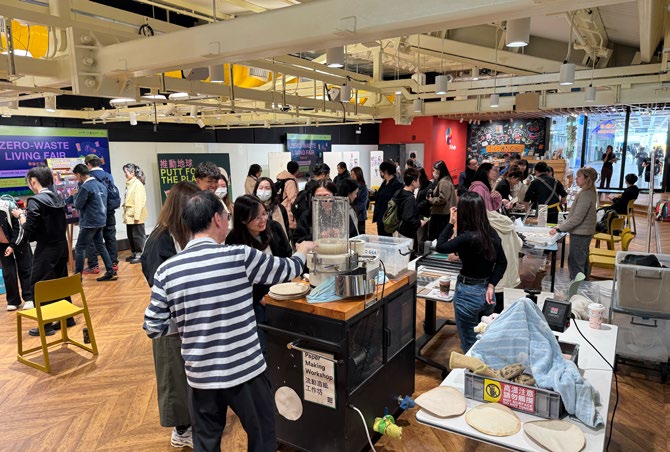
bringing hands-on sustainability to campus as part of an eight-university tour. The event engaged 276 participants, including 260 pledges, 9 student helpers, and 7 student leaders from the Sustainability Leadership Programme. Attendees explored interactive booths, took part in upcycling and repair workshops led by local organisations and student teams, and learned how to reduce daily waste through mindful consumption. A highlight of the event was the exclusive souvenir—upcycled from returned lunchboxes through the Lunchbox Lending Programme—offered to participants who completed a pre-event survey.

- “Look For Green” recycling truck
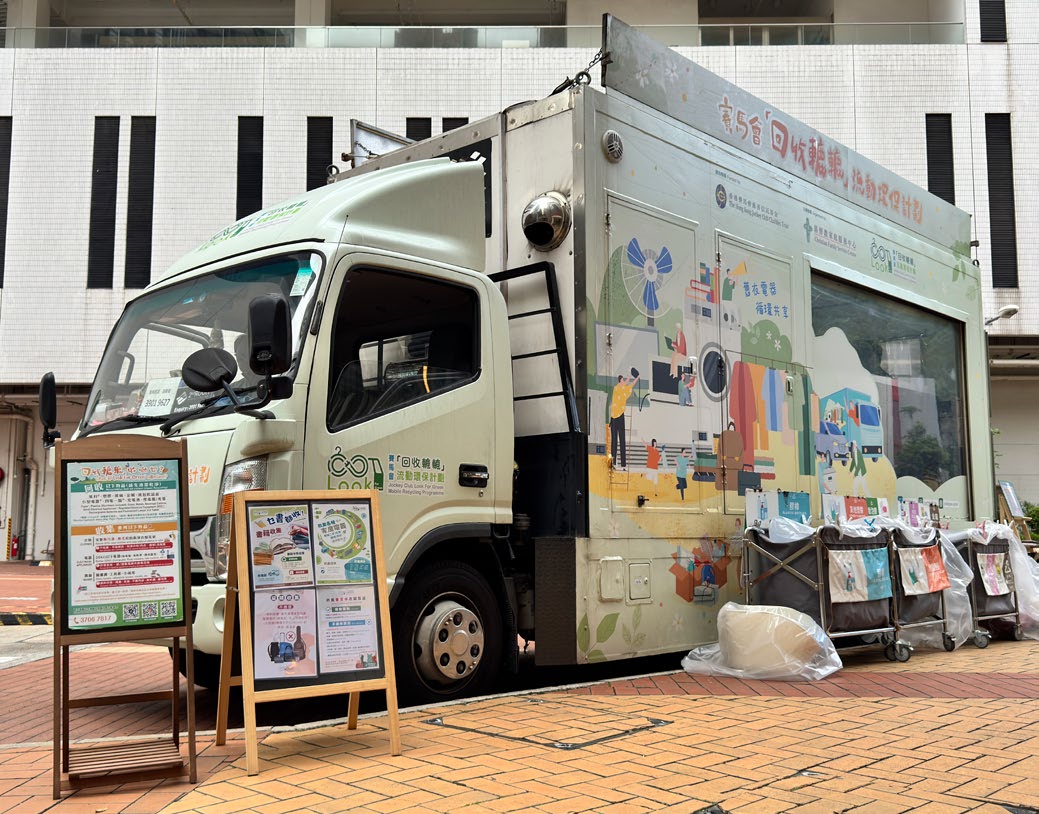
On 21 November 2024, HKBU hosted the “Look For Green” Mobile Recycling Programme to promote sustainable practices among the University community. The event engaged approximately 30 participants in responsible recycling and reuse activities. A mobile truck collected a wide array of recyclables, including paper, plastics, metals, and glass. The initiative also facilitated the community sharing of reusable items such as clothing, books, and small home appliances, providing a convenient channel for responsible waste disposal and reinforced the principles of a circular economy on campus.
- Eyeglasses recycling
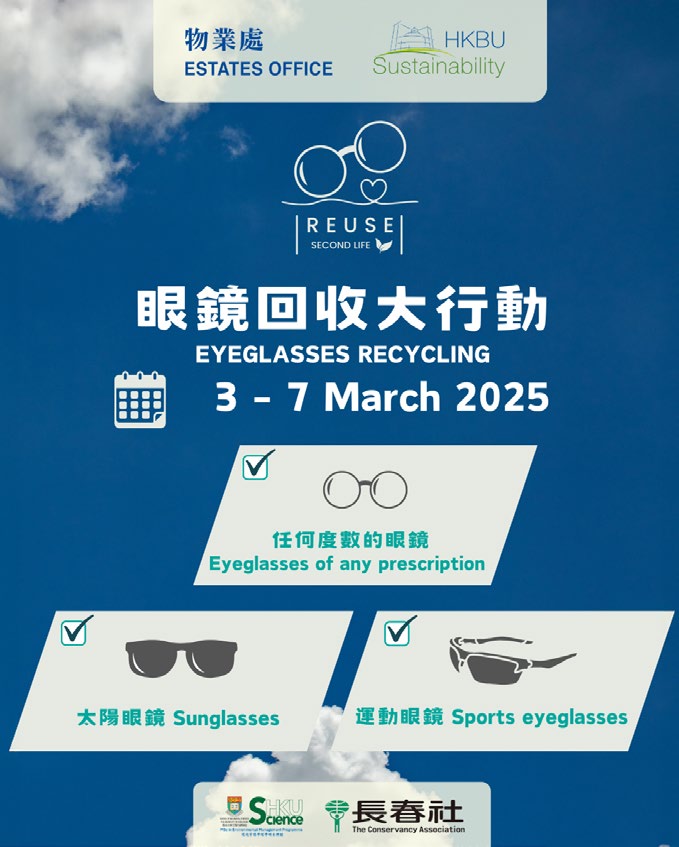
In support of a postgraduate student project, a collection initiative for surplus eyewear was implemented in March 2025. This project aims to provide a second life to used eyeglasses, promoting sustainability and waste reduction. Collection points were set up across campuses to encourage donations from students and staff. Eyewear accepted for donation includes eyeglasses of any prescription, sunglasses, and sports eyeglasses. More than 100 collected eyeglasses were made available at charity sale for public. This initiative contributes to a circular economy, while promoting responsible consumption and environmental awareness on campus.
Performance Indicators for 2024-25
Compared to the baseline year of 2016-17, municipal solid waste and recyclables metrics have improved.
| Performance indicators | 2024-25 against baseline year (2016-17) | |
| Municipal solid waste | Per GFA (kg/sq.m.) | -16.14% |
| Per capita (kg/FTE) | -28.07% | |
| Recyclables | Per GFA (kg/sq.m.) | +214.05% |
| Per capita (kg/FTE) | +169.92% | |
HKBU Sustainability Report 2024 - 2025