SDG 07: Affordable and Clean Energy
SDG 07:
AFFORDABLE AND CLEAN ENERGY
Ensure access to affordable, reliable, sustainable and modern energy for all.
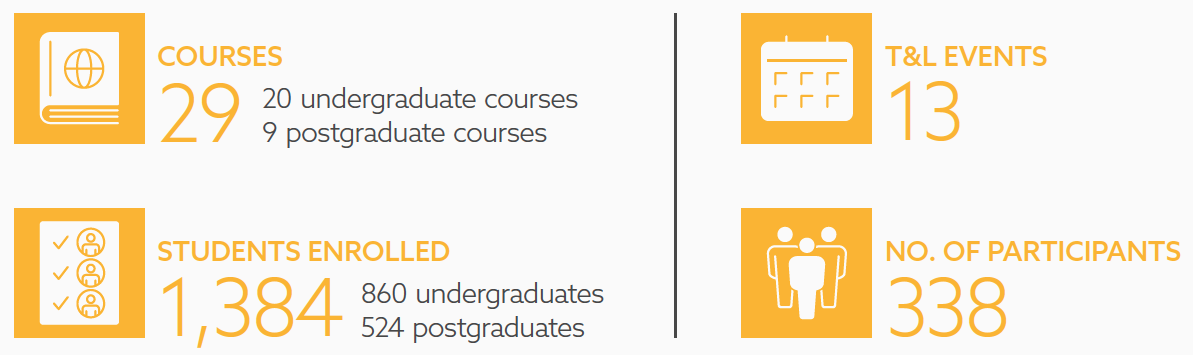
Jointly organised by the Language Centre and the Department of Physics, Dr Martin Ma and Dr Joshua Chan led a group of 20 students to Cambodia to address energy challenges through community-based education. Partnering with the Cambodian Children’s Advocacy Foundation Organization (CCAFO), the students engaged with over 130 rural children aged 5 to 10 at CCAFO’s Motherland Cambodia Education Center in Kampong Speu Province. The students delivered a three- day programme to introduce concepts of renewable energy through interactive games and videos, English language learning and storytelling, water and wind turbine models, and miniature solar- powered karts, demonstrating how natural resources convert to motion. This project strengthened HKBU students’ ability to design culturally sensitive curricula, enhancing their adaptability and problem-solving skills. while providing rural children with firsthand exposure to clean fuel and renewable energy generation and igniting their curiosity about sustainable energy.
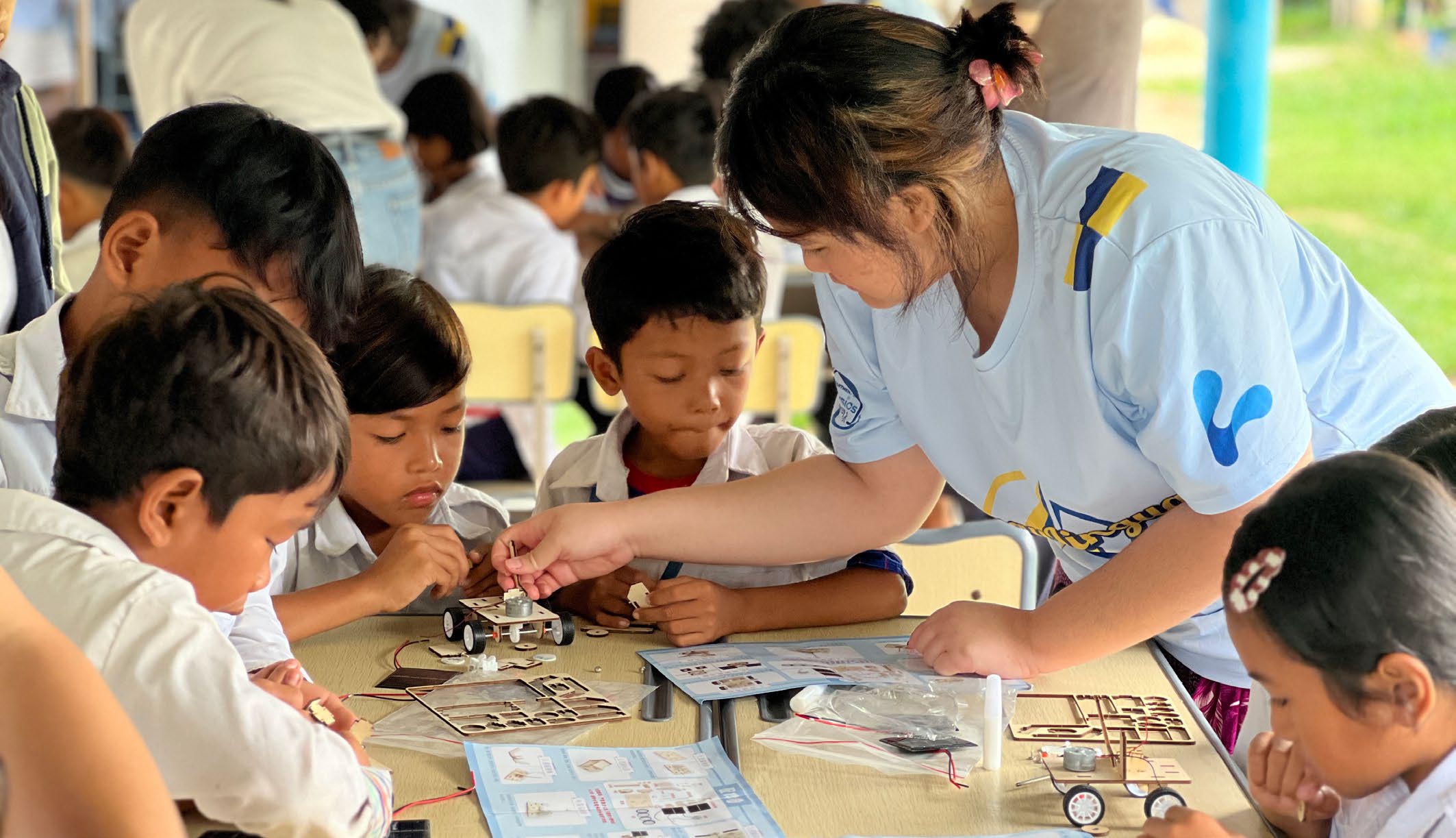
Affordable and clean energy in practice: A STEM service- learning collaboration
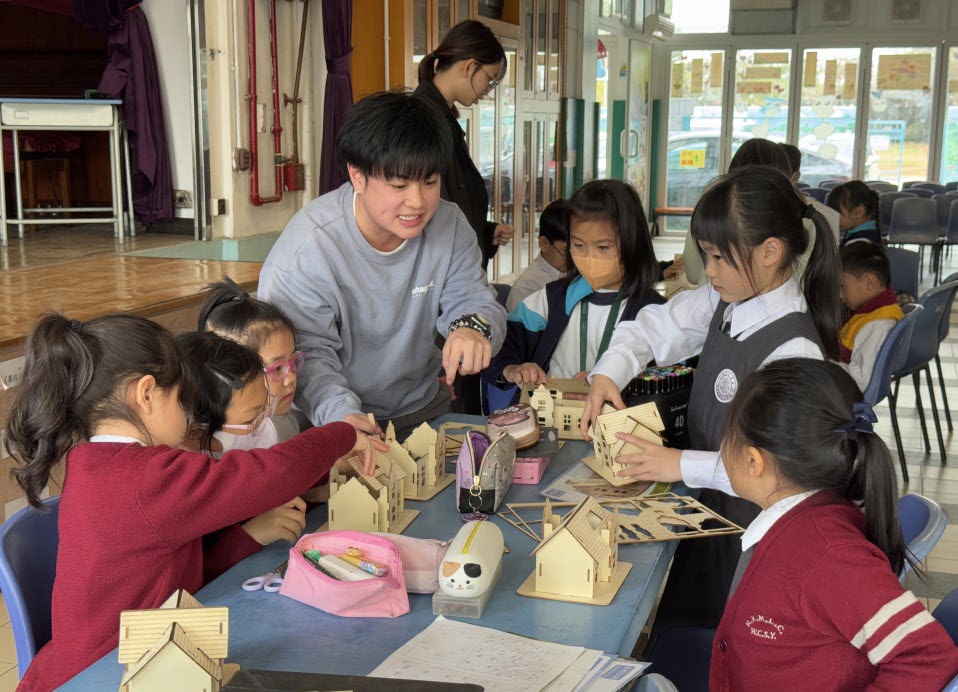
Led by Professor Daphne Mah at the Academy of Geography, Sociology and International Studies, students visited HKMLC Wong Chan Sook Ying Memorial School with an aim to equip young minds with knowledge of sustainability and technological innovation to build a more sustainable future. Through this initiative, students delivered a STEM energy workshop for nearly 100 primary school students, where they built DIY weather stations and explored how temperature, sunlight and wind influence solar generation and energy efficiency. These activities aimed to foster environmental stewardship and encourage the primary school students to envision a low-carbon society. HKBU students were also able to apply their knowledge in real-world contexts.
Department of Biology
Authors: Wenhua XUE, Jian YE, Zhi ZHU, Reeti KUMAR, Jun ZHAO*
*Corresponding author
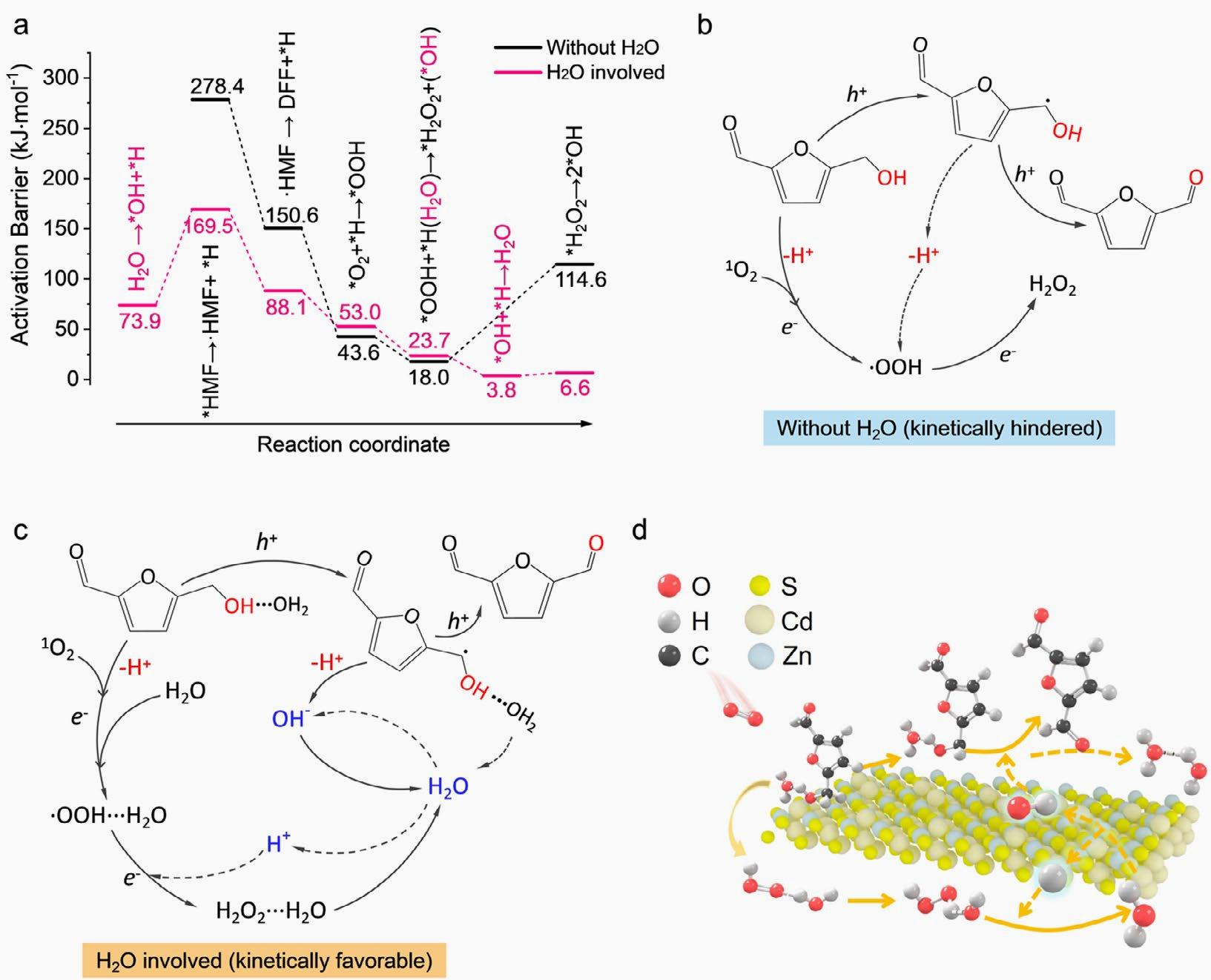
The study shows that adding minute amounts of water to acetonitrile unlocks sustained, higher‑yield solar photocatalytic oxidation of biomass‑derived alcohols, exemplified by the conversion of 5‑hydroxymethylfurfural (HMF) to 2,5‑diformylfuran (DFF) with up to 97% conversion and 66.6% yield under ambient conditions. Mechanistically, trace water participates in hydrogen‑bonding to lower the activation barriers for C–H and O–H bond cleavage, while promoting benign decomposition of inhibitory H₂O₂, preventing catalyst deactivation and maintaining the reaction progress. The solvent‑tuning concept generalises across photocatalysts (e.g. CdS, ZnIn₂S₄, g-C₃N₄) and diverse alcohol substrates, indicating a scalable route for more energy‑efficient, low‑carbon fine chemical production powered by light rather than heat. By improving solar‑to‑chemical conversion efficiency and decreasing fossil energy inputs, the work supports SDG 7’s aims on renewable energy use and efficiency gains in industrial processes.
Understanding the up-scaling mechanisms of urban energy transitions: An application of a capital-based framework to a comparative case study of two solar communities in Hong Kong
Academy of Geography, Sociology and International Studies, David C Lam Institute for East-West Studies
Authors: Daphne Ngar-yin MAH, Darren Man-wai CHEUNG*, Wing Kei CHEUNG, Aijia WANG, Andy Wai-hei SIU, Michael K.H. LEUNG, Maggie Yachao WANG, Mandy Wai-ming WONG, Kevin LO, Altair Tin-fu CHEUNG
*Corresponding author
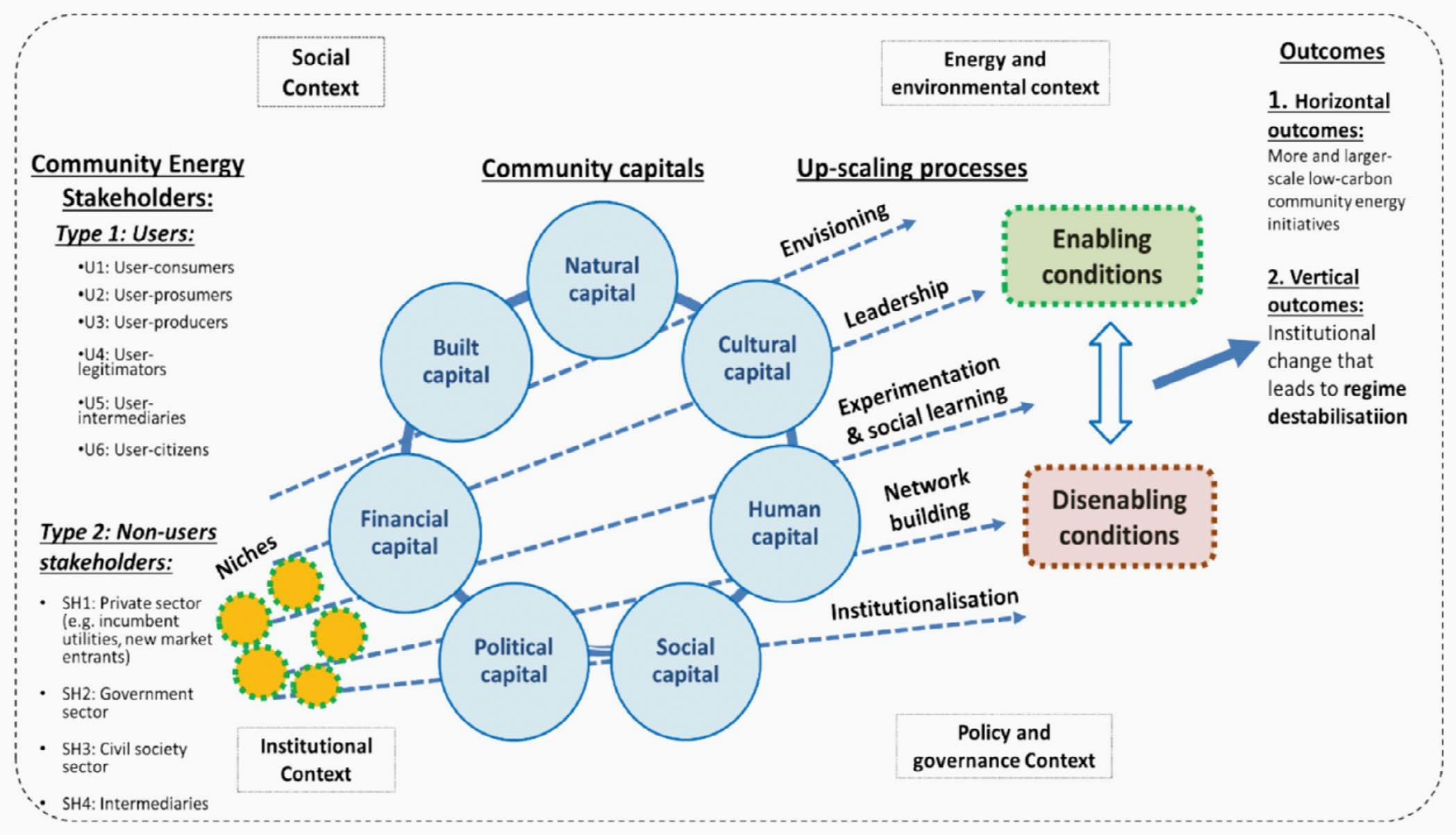
This study explains how to scale up urban community solar by proposing a capital‑based up‑scaling model and testing it in two Hong Kong residential estates under a high feed‑in tariff policy launched in 2018. Using mixed methods—78 household interviews, 21 stakeholder interviews, and two deliberative workshops—the authors identify five interacting processes that enable scale: envisioning shared goals, community leadership, experimentation and social learning, network building, and institutionalisation with market and policy support. They also diagnose common barriers (e.g. unclear shared vision, limited leadership, few trial‑and‑error pilots, weak replication, thin networks, and electricity‑market constraints) and show that residents adopt multiple user roles (consumer, prosumer, intermediary and legitimator) that leverage community capitals to advance solar. The framework offers practical guidance for cities to mobilise households, align stakeholders, and embed community solar in institutions, thereby contributing to SDG 7 through wider, durable clean‑energy uptake.
Solar photovoltaic system
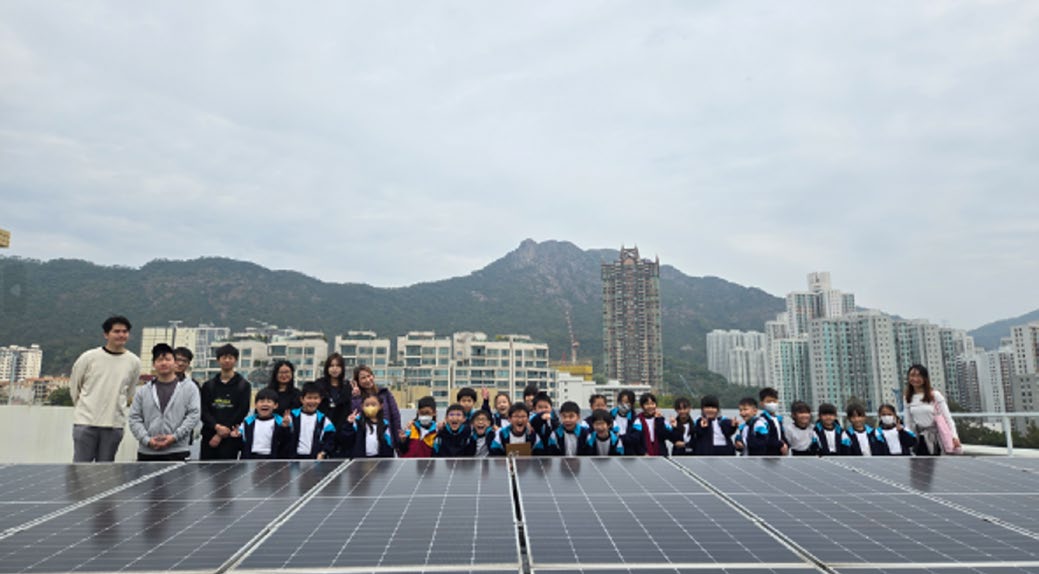
In 2023, HKBU installed solar photovoltaic systems on the rooftops of six buildings, covering approximately 1,800 m². Over the past academic year, these panels generated around 453,500 kilowatt-hours (kWh) of clean electricity, resulting in a reduction of approximately 178 tonnes of carbon dioxide equivalent emissions. Supported by CLP Power Hong Kong Limited’s Renewable Energy Feed-in Tariff Scheme, this project contributes to the advancement of local clean energy. Real-time solar generation data is publicly accessible on the HKBU website and via the HKBU mobile app for students and staff.
Renewable energy system at Crop Science Laboratory
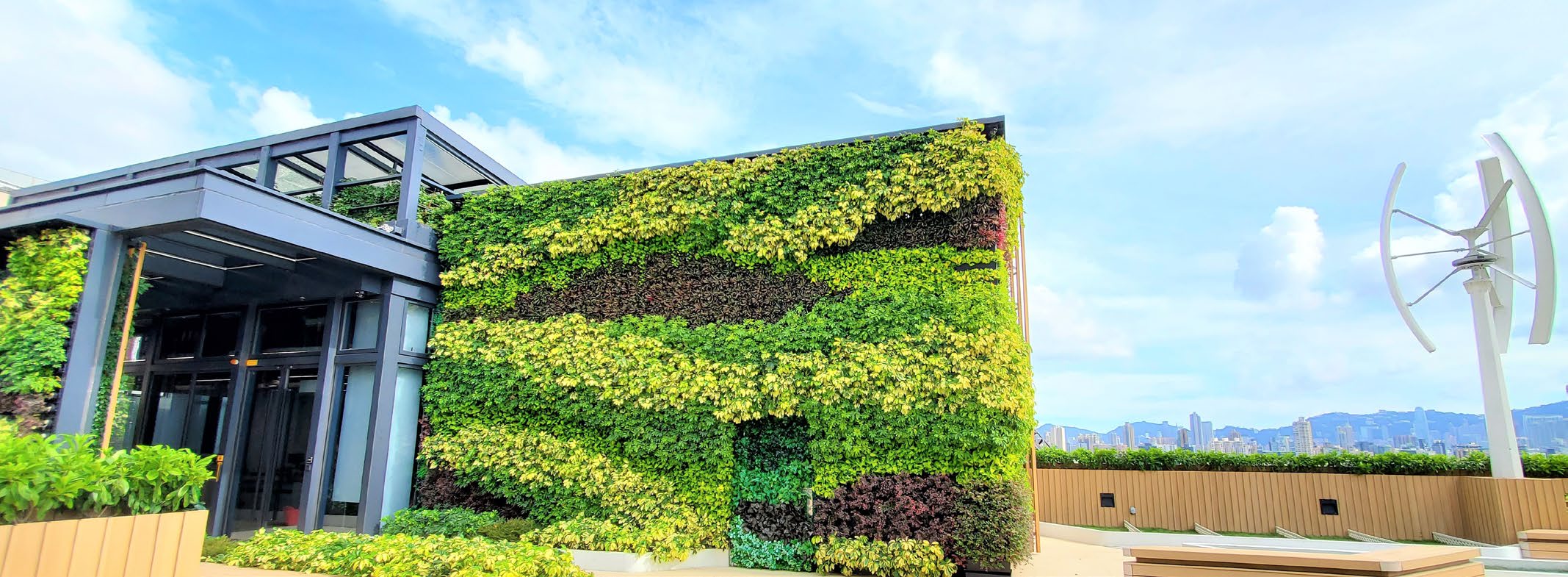
The Crop Science Laboratory, situated on the rooftop of the Sir Run Run Shaw Building, exemplifies a holistic approach by combining research facilities, green spaces, and recreational areas to create a vibrant social hub. Its innovative renewable energy system features an air-quality improvement photovoltaic system that generates approximately 10,000 kWh of electricity per year, along with a wind turbine system that produces around 4,500 kWh annually. These systems significantly reduce reliance on conventional energy, supporting campus sustainability.
The laboratory has gained recognition for its sustainable design and seamless integration with the campus environment. It was a finalist in the “Special Award – Heritage & Adaptive Re-use” category at the Hong Kong Institute of Architects Annual Awards 2022/23, and in the “Existing Buildings: Completed Projects – Institutional” category of the Green Building Award 2023, co-organised by the Hong Kong Green Building Council and Professional Green Building Council.
Five-year energy efficiency plan (2025 – 2030)
New capital projects and major renovation
- Green building certification
The University Green Policy for Capital Projects and Major Additional, Alteration and Improvement Projects for University Campus sets out the policy for these projects to achieve green building ratings under the BEAM Plus Certification Scheme of which energy efficiency performance is one of the key assessment criteria.
- Carbon and energy reduction initiatives
The following key features will be implemented in our buildings whenever practicable.
Building services and systems
- Heating and cooling: Use energy-efficient systems, including advanced chillers and fans that adjust their speed based on need.
- Lighting: LED lights and dimmers help reduce energy use.
- Lifts and escalators: The lifts have energy-saving motors, and the escalators can operate at lower speeds when not in heavy use.
- Smart controls: Use advanced systems to manage energy use, including sensors that adjust lighting and air conditioning based on natural light and occupancy.
- Renewable energy: Install solar panels and wind turbines to generate clean energy.
- Electric vehicle charging: Provide medium EV charging facilities for parking spaces.
Architectural design
Natural elements are also incorporated into the designs to reduce energy needs:
- Roof gardens and landscapes
- Green walls for insulation
- Sun-shading features to keep buildings cool
- Natural ventilation systems to improve airflow
- Well-designed windows to enhance insulation and reduce noise
Existing buildings
- Carbon and energy reduction for building systems
Actions are taken to improve energy efficiency in the buildings:
- Upgrade equipment: Replace old chillers with newer, more efficient models when they reach the end of their lifespan.
- Optimise systems: Review and adjust the heating and cooling systems for better performance.
- Lighting improvements: Install LED lighting in ongoing renovation projects.
- Smart classrooms: Upgrade classrooms with advanced audio-visual equipment and smart sensors to control lighting and air conditioning.
- Enhanced metering: Improve our sub-metering system for better energy tracking.
- Smart technology: Use smart sensors with Internet of Things (IoT) technology to optimise energy use.
- Ongoing monitoring: Regularly check and manage power quality across buildings.
- Renewable energy development: Increase the use of renewable energy on campus.
- Electric vehicle charging: Upgrade and increase the number of EV charging stations, aiming for at least 50% of parking spaces to have medium chargers by 2030.
- Green features: Follow guidelines for eco-friendly building improvements.
- Carbon and energy management approaches
Regular energy and carbon audits are conducted and policies are reviewed to enhance sustainability:
- Energy performance monitoring: Monitor energy use across multiple campuses each month using smart technology.
- Energy audits: Perform third-party energy audits for each building at least every five years, except for those scheduled for renovation or closure.
- Annual carbon audit: Conduct annual audits that cover all university campuses.
- Air conditioning review: Review air conditioning schedules every two years. A recent review reduced operating hours by 10 hours per week in administrative offices.
- Indoor temperature settings: Adjust indoor temperature settings to 24°C in summer (increased from 22°C) for general areas, with exceptions for special needs.
Performance indicators for 2024-25
Comparison against baseline year 2016-17
Improvements have been observed for all performance indicators in 2024-25 compared to the baseline year of 2016-17.
| Performance indicators | 2024-25 against baseline year (2016-17) | |
| Greenhouse gas (GHG) emissions | Per GFA (tCO2e/sq.m.) | -33.57% |
| Per capita (tCO2e/FTE) | -42.93% | |
| Energy consumption | Per GFA (kWh/sq.m.) | -7.91% |
| Per capita (kWh/FTE) | -20.84% | |
| Water consumption | Per GFA (c.m./sq.m.) | -14.12% |
| Per capita (c.m./FTE) | -26.40% | |
Greenhouse gas emissions for 2024-25
- Scope 1 - Direct GHG emissions: 879 tCO2e
- Scope 2 - Indirect GHG emissions: 15,450 tCO2e
- Scope 3 - Other indirect GHG emissions: 192 tCO2e
Total GHG emissions: 16,521 tCO2e
Awareness campaigns
E.A.S.Y. Campaign
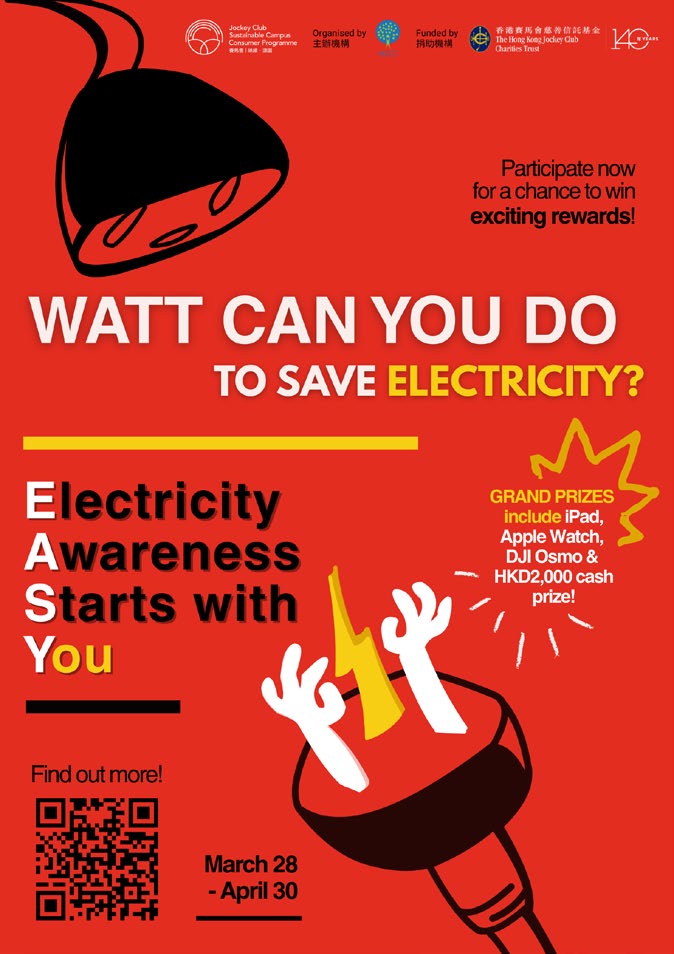
From March to April 2025, the Electricity Awareness Starts with You (E.A.S.Y.) campaign was launched in collaboration with the Jockey Club Sustainable Campus Consumer Programme (JCSCCP) to promote responsible energy consumption. This student-focused digital initiative featured gamified challenges, including educational puzzles and quizzes on eco-labelling. These encouraged participants to adopt energy-saving habits.
Every Action Counts Campaign
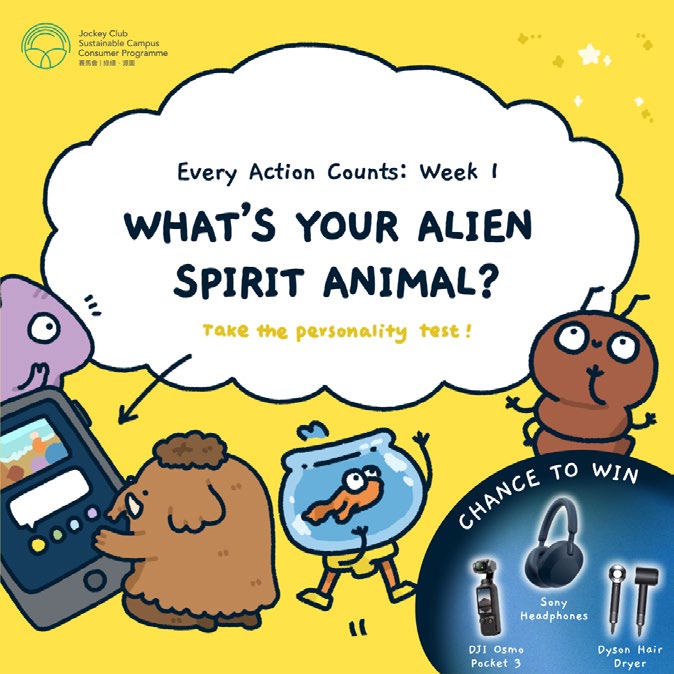
Organised by JCSCCP in collaboration with Learn Root, the Energy and Water Conservation Promotion Booth under the Every Action Counts Campaign was showcased on 25-26 November 2024 at the Li Promenade of the HKBU campus. The booth featured interactive displays and a demonstration of a behaviour-activated showerhead, promoting awareness of energy and water conservation, while offering small green gifts to participants.
HKBU Sustainability Report 2024 - 2025