SDG 14: Life Below Water
SDG 14:
LIFE BELOW WATER
Conserve and sustainably use the oceans, seas and marine resources for sustainable development.
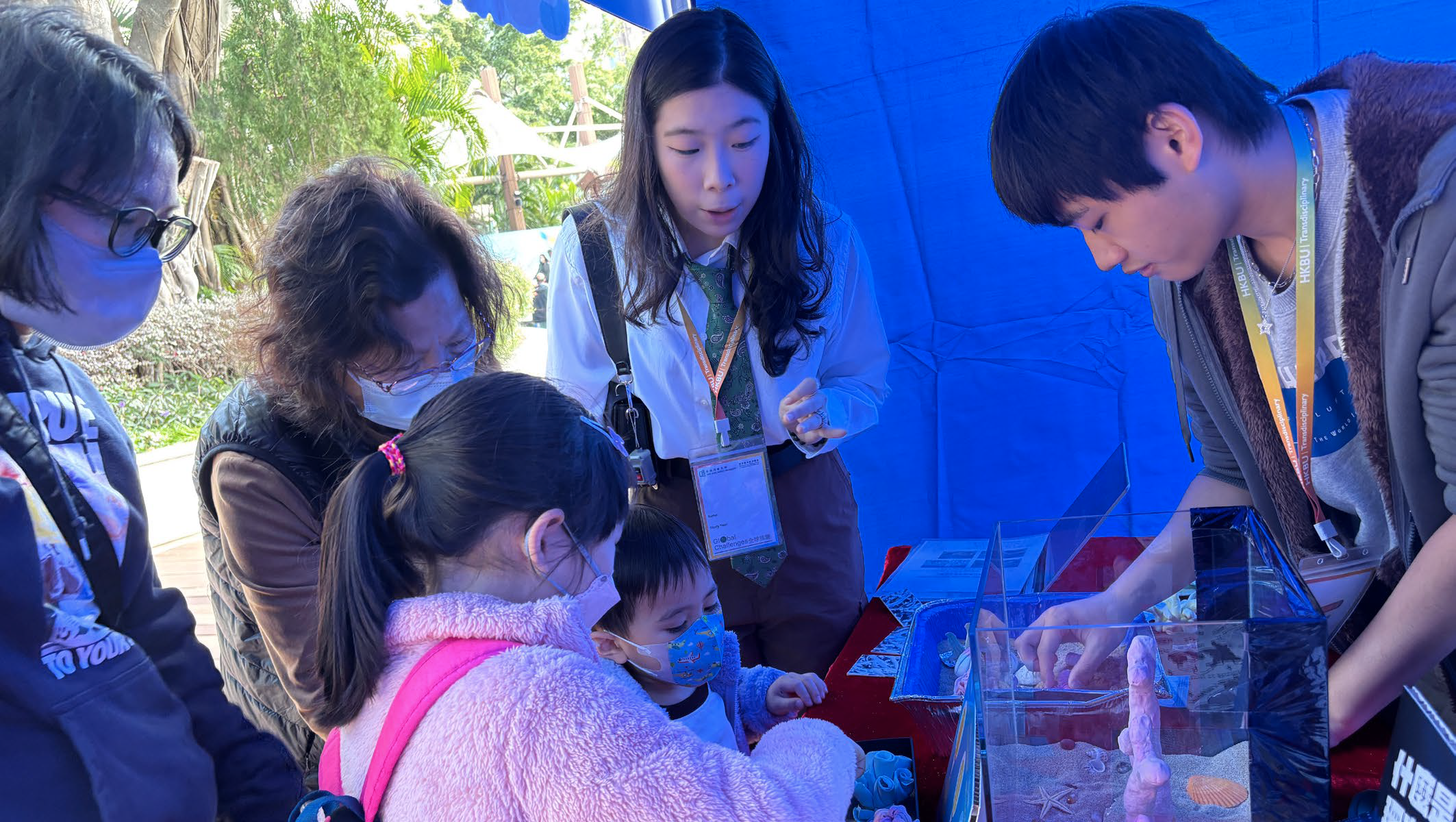
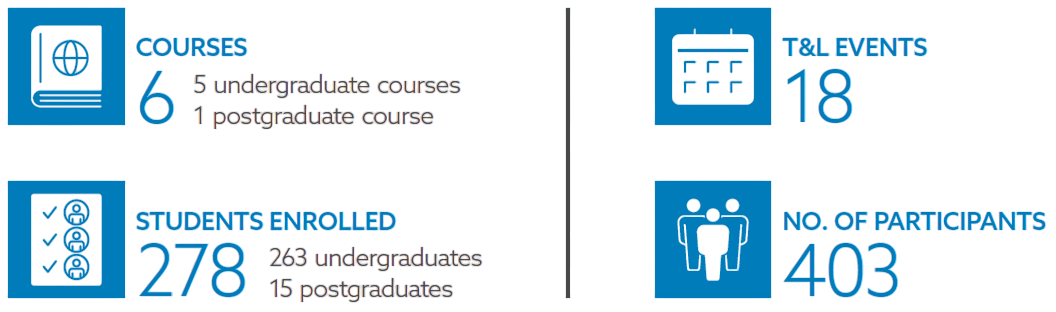
Guided by Dr Glos Ho, Dr Patrick Yue, and Dr Gray Ho, 135 Year 1 students from the Global Challenges course showcased innovative approaches to advancing SDG 14 through the “Unconventional Ocean Date” project. Students designed creative approaches such as marine debris detection robots, interactive beach cleanup video games, and educational card games on marine biodiversity. The project attracted over 800 participants, including secondary students and children, raising awareness about marine pollution and sustainable ocean stewardship. Selected projects were invited by Ocean Park’s Mission R to present at public outreach events, fostering community engagement on coastal and marine issues.
Life below water study tour to Sydney
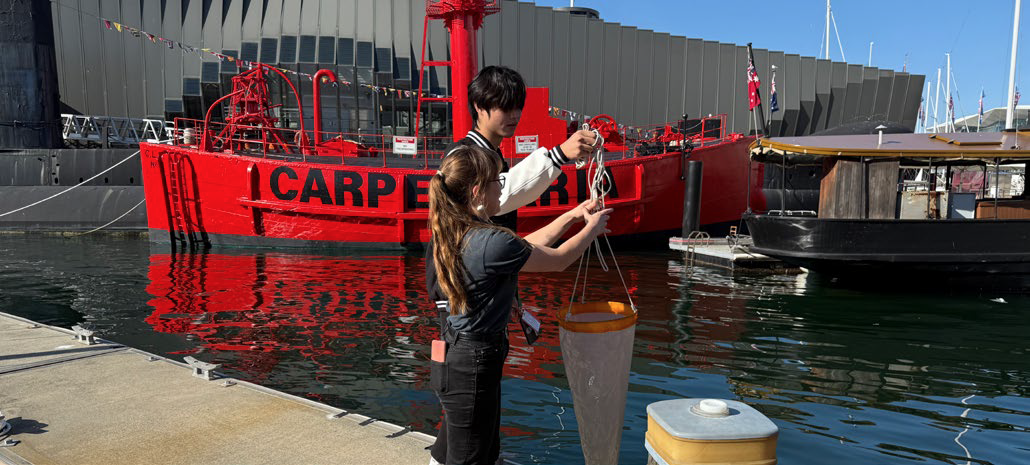
Twenty-four HKBU students went on a transdisciplinary study tour to Sydney in May 2025, led by Dr Glos Ho of the Division of Transdisciplinary Undergraduate Programmes, and Dr Patrick Yue from the Department of Biology, to explore sustainable practices for marine conservation. Supported by Western Sydney University, the tour explored how artificial intelligence supports marine environmental monitoring and ecosystem management. Students participated in laboratory sessions analysing microplastic pollution and aquatic invertebrate diversity, assessing impacts on freshwater species like the platypus. Visits to Macquarie University included a seawall block installation at Darling Harbour, demonstrating coastal habitat restoration and urban marine biodiversity enhancement. A workshop at the Australian National Maritime Museum introduced water quality testing and plankton sampling, while OceanWatch hosted a session at the Sydney Fish Market, highlighting sustainable seafood and responsible fisheries management. The learning tour deepened students’ understanding of reducing marine pollution, protecting aquatic habitats, and promoting sustainable use of marine resources.
Kayaking for protecting marine life and ecosystems
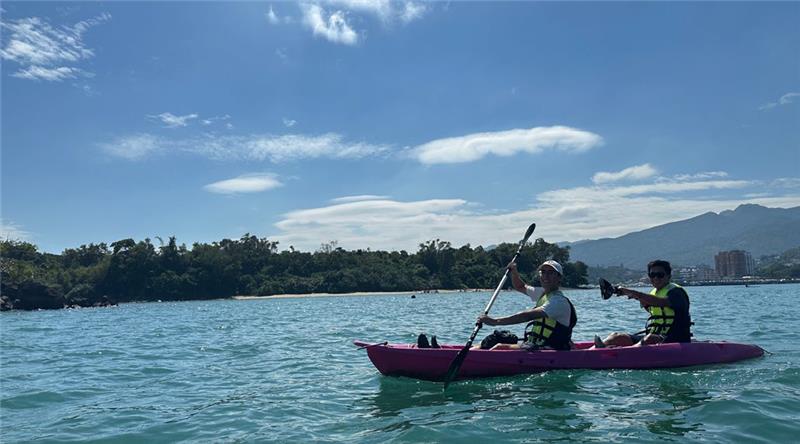
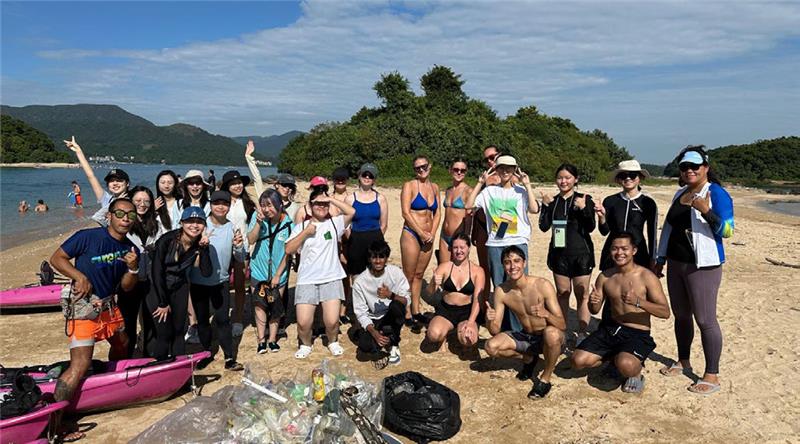
”Service@ TuesDates: Kayak Eco-Rescue Mission” promoted marine conservation by removing beach litter and ocean plastics. Organised by the Leadership Qualities Centre and Blue Sky Sports Club, 23 students acquired basic kayaking skills before paddling along the coastline to remove debris threatening marine species. Through their hands-on service, students deepened their understanding of ocean pollution and its impacts on marine ecosystems. By engaging in conservation efforts, participants developed a stronger connection to the marine environment and a commitment to sustainable practices that support the health of life below water.
Department of Biology
Authors: Hei Ching WONG, Chun Ming HOW, Leyi XI, Chien Hsiang LIN, Ming Tsung CHUNG, Jian Wen QIU, Chris Kong Chu WONG, Kelly SU, Jill Man Ying CHIU*
*Corresponding author
This study investigates the feeding ecology of the critically endangered large yellow croaker (Larimichthys crocea) across the Hong Kong and Taiwan regions of China using gut-content 18S metabarcoding and stable isotope analysis to track life-stage dietary shifts and trophic positions. Juveniles typically feed on planktonic prey and adults on benthic species, but Hong Kong adults showed unexpectedly low δ15N values, indicating disrupted ontogenetic trophic transition in degraded habitats. The populations in Taiwan, China displayed expected transitions with higher adult trophic positions, highlighting the influence of local environmental conditions and management. Trawl and isotope baselines mapped prey fields and food-web linkages, confirming a shift from pelagic to demersal resources with growth. The authors recommend marine protected areas, stricter mesh and catch-size regulations, and timing moratoria to protect spawning groups and nursery grounds. These actions advance sustainable fisheries and ecosystem recovery consistent with SDG 14.

Phylogenomics of bivalvia using ultraconserved elements reveal new topologies for pteriomorphia and imparidentia
Department of Biology
Yi-Xuan LI, Jack Chi-Ho IP, Chong CHEN, Ting XU, Qian ZHANG, Yanan SUN, Pei-Zhen MA, Jian-Wen QIU*
*Corresponding author
This study builds a new ultraconserved element (UCE) probe set for bivalves and captures hundreds to thousands of loci from fresh and museum specimens to reconstruct a robust, dated phylogeny across six major marine clades, improving long-standing uncertainties in shellfish evolution critical for biodiversity stewardship under SDG 14. The probe set recovers a mean of 849 UCEs per specimen and provides higher support at deep nodes, yielding new, well-supported topologies for Pteriomorphia and Imparidentia that refine relationships among oysters, mussels, scallops, clams, and allies important to fisheries and habitat engineering functions in coastal ecosystems. By providing a scalable genomic toolkit and clarified lineages that guide taxonomy, protected area design, stock assessment, and trade regulation, the work strengthens science-based marine management and conservation of ecologically and economically vital bivalves worldwide.
The University collaborates with its on-site caterers to source sustainable seafood for its campus dining facilities, with shark fin and other endangered marine species strictly excluded from all menus, actively promoting the importance of ocean conservation and ensuring that all catering operations contribute positively to the health of the oceans.
HKBU Sustainability Report 2024 - 2025