SDG 16: Peace, Justice and Strong Institutions
SDG 16:
PEACE, JUSTICE AND STRONG INSTITUTIONS
Promote peaceful and inclusive societies for sustainable development, provide access to justice for all and build effective, accountable and inclusive institutions at all levels.
The General Education course “Sustainable Peace: Conflict Resolution and Reconciliation of Divided Communities”, led by Professor Martin Chung, enrolled 48 students and equipped them with both theoretical knowledge and practical skills in conflict resolution and peacebuilding. Drawing on comparative case studies from Asia and Europe, students examined the roles of international organisations, governments and civil society in violence prevention, transitional justice and institutional reform. The students developed context-sensitive solutions for sustainable peace by analysing conflicts. They also practised mediation, preventive diplomacy and consensus-building through immersive, multi-stakeholder simulations, thereby strengthening their abilities in violence reduction and inclusive decision-making. The course fostered the students’ capacity to design rights-respecting policies and reconciliation strategies, preparing them to contribute to the development of accountable, inclusive institutions and to advance sustainable peace in their own communities.
Building bridges with community engagement and arts-based interventions
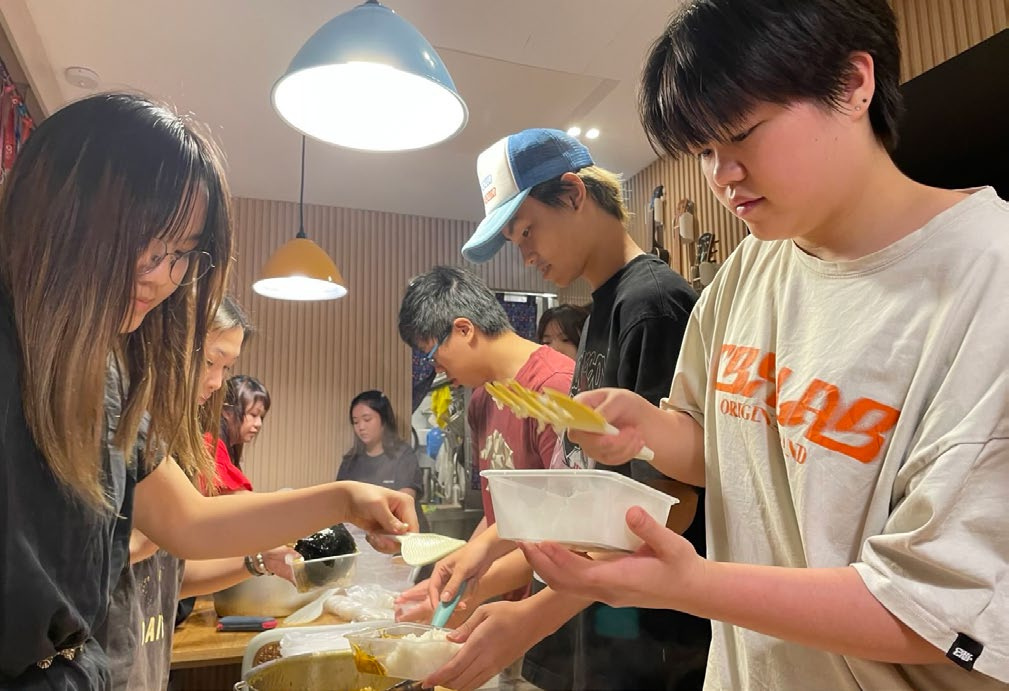
To foster the building of peaceful and inclusive societies, 50 students from the General Education course “Striving for Sustainable Peace through Cultural Activities and Creative Arts” participated in service-learning community engagement activities, benefitting 238 individuals. In partnership with Runners’ Food, students helped distribute meals to homeless individuals at Tung Chau Street Park, promoting dignity and social cohesion. This approach challenged stereotypes and nurtured empathy. Students also collaborated with One Bite Design Studio and joined a place-based walk in Sheung Wan to observe and engage with community members, grounding their ideas in the real needs of the community and modelling inclusive decision-making and non-violent problem-solving. On campus, students initiated cross-cultural dialogues to bridge divides and produced a music video to raise public awareness on subdivided housing. By cultivating multicultural sensitivity and non-discrimination, students developed creative, arts-based interventions that fostered peaceful relationships within the community.

Academy of Chinese, History, Religion and Philosophy
Author: Chi Man KWONG
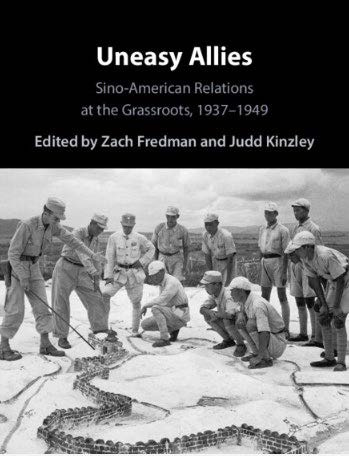
The book chapter in Uneasy Allies: Sino-American Relations at the Grassroots, 1937–1949 explores Sino-British-American military interactions in South China during World War II, revealing how informal networks enabled cooperation amid strategic vagueness, while power imbalances and competing priorities led to tensions and Britain’s displacement by American influence. The chapter details episodes such as the role of British Army Aid Group’s intelligence and the group’s ad hoc operations during the Japanese Ichigo Offensive, underscoring the fragility of alliances in complex political landscapes. This analysis highlights the mechanisms for building resilient institutions and peaceful coalitions, informing contemporary efforts to foster international cooperation in conflict zones. By examining the decline of colonial influence and rise of new orders, it supports strategies for accountable governance and reduced inequalities in global partnerships. In Asia’s context, where historical rivalries persist, these insights promote justice, stability and collaborative frameworks to prevent escalation and enhance sustainable peacebuilding amid geopolitical shifts. The research of this book chapter is supported by a General Research Fund project entitled “The Japanese ‘Total-State’ Experiment in Hong Kong, 1942-1945”.
Understanding the mechanisms that link information uncertainty to belief formation
Department of Interactive Media
Authors: Yuner ZHU, Xinzhi ZHANG, King Wa FU
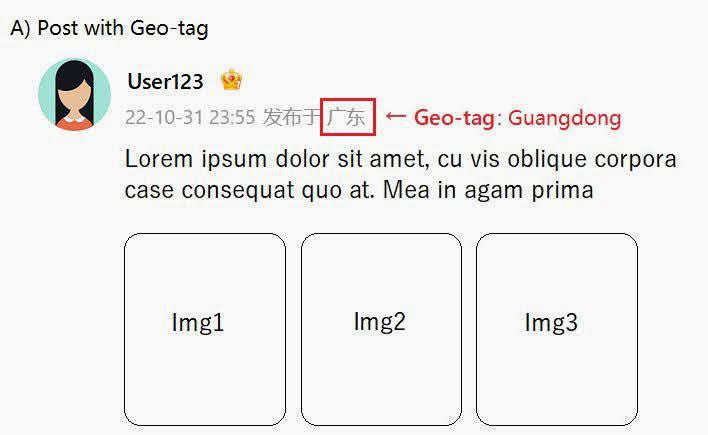
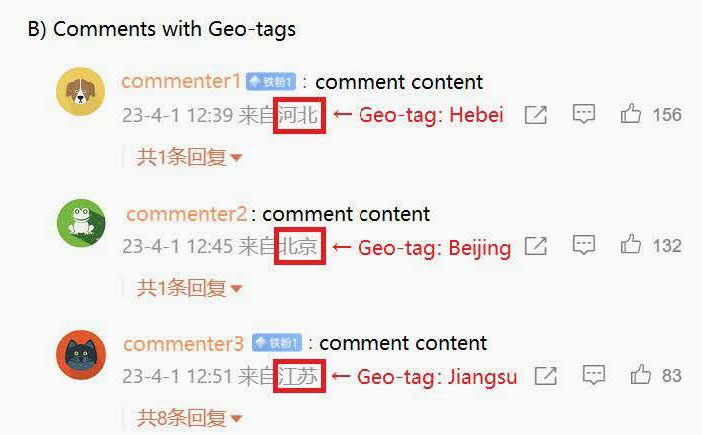
The General Research Fund (GRF) project examines how exposure to internet censorship generates information uncertainty that can be filled by worldview-confirming conspiracy theories, expanding theories of conspiratorial beliefs with the roles of censorship experience and motivated reasoning. It uses mixed methods across three studies: a population-based survey integrating situational and dispositional factors, an experiment simulating incidental exposure to censorship with follow-ups, and an observational social media study of spontaneous reactions and sharing behaviour. By illuminating mechanisms linking information manipulation to belief formation, the project speaks directly to SDG 16 on ensuring public access to information and protecting fundamental freedoms, informing policies that enhance transparency and resilience against misinformation. A related output on mandatory location disclosure shows how surveillance shapes expression and privacy cynicism, offering further evidence for information governance and institutional accountability under SDG 16.
HKBU Sustainability Report 2024 - 2025