SDG 02: Zero Hunger
SDG 02:
ZERO HUNGER
End hunger, achieve food security and improved nutrition and promote sustainable agriculture.
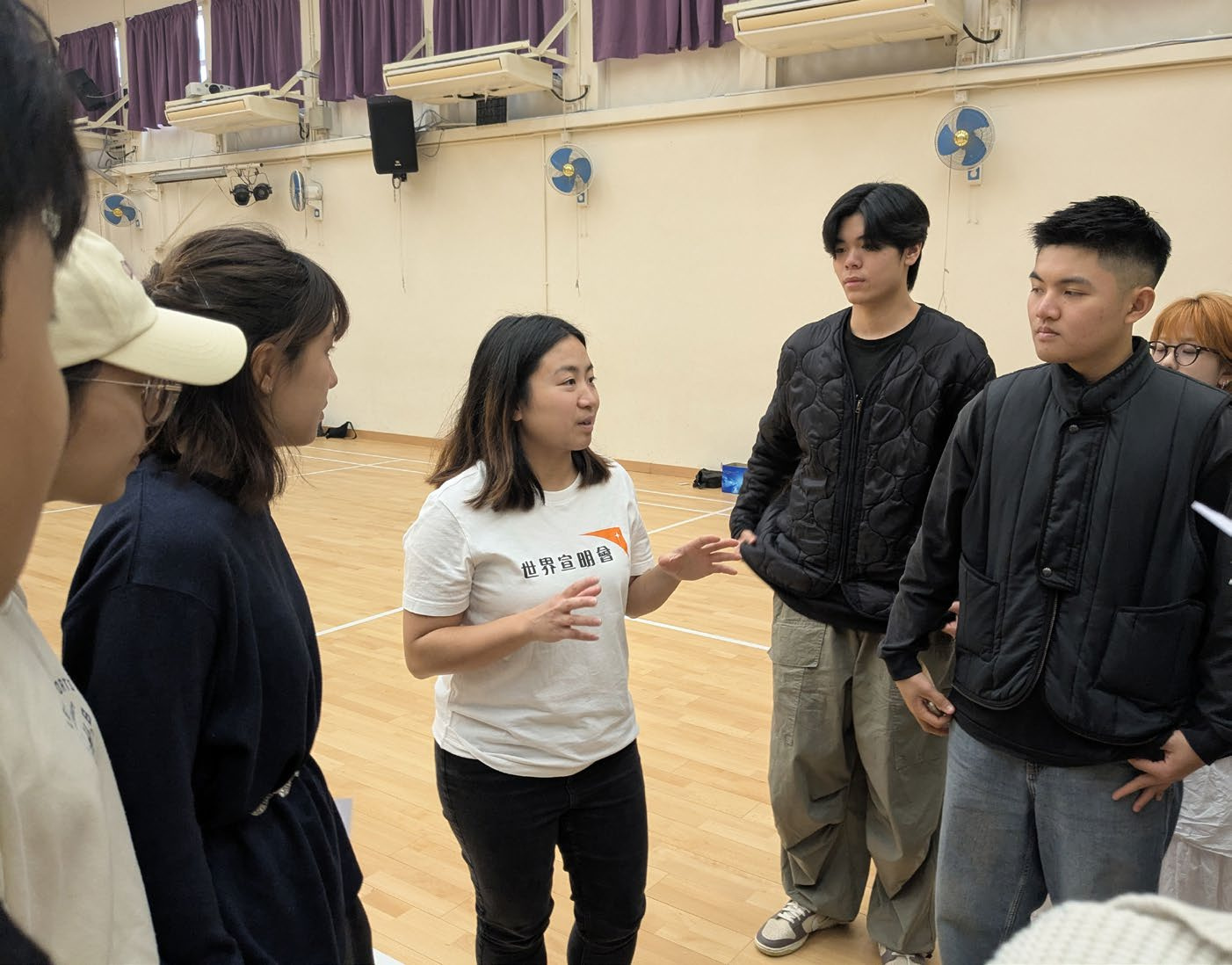
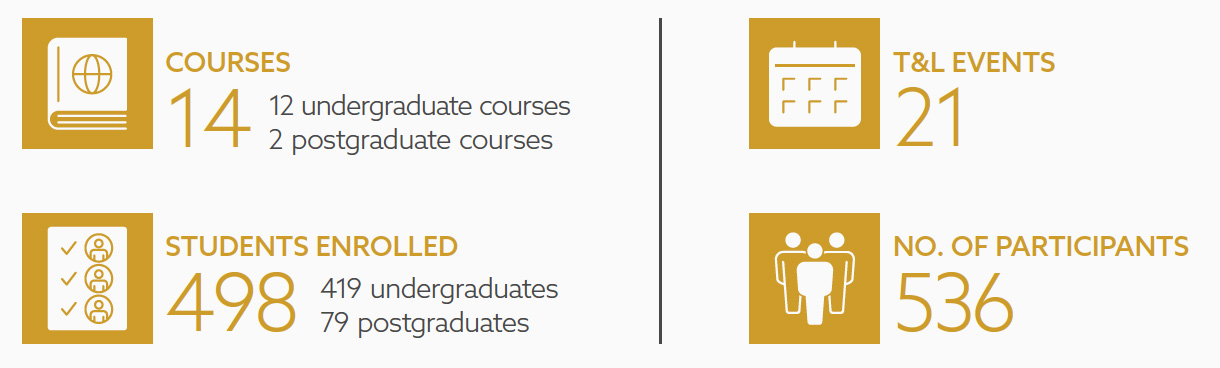
In the service-learning course “Campaign Planning and Management”, Dr Vivienne Leung from the Department of Communication Studies partnered with World Vision’s School Famine Ambassador Programme to engage 42 students in practical efforts to raise awareness on global food insecurity. Through interviews with programme staff and secondary school committees, and participating in a 24-hour hunger immersion experience, students gained firsthand insight into the lived impacts of food insecurity. Applying strategic communication theory, they then designed multichannel campaigns using digital media, storytelling and face-to-face outreach campaigns to build awareness and foster youth advocacy.
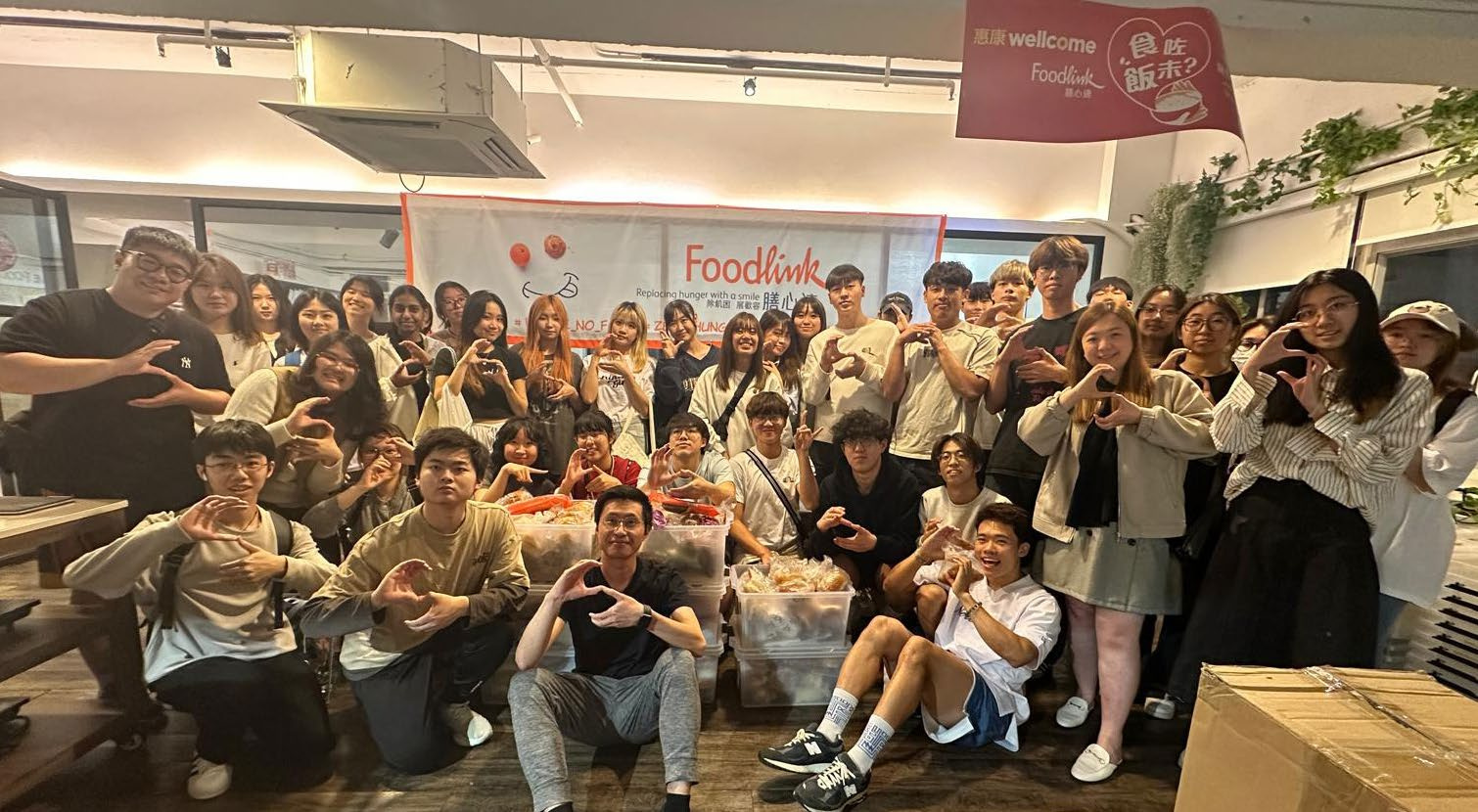
Connecting communities: Re-distributing bread to those in need
The “Replacing Hunger with Bread” service programme aimed to connect with the non-profit organisation, Foodlink Foundation, to collect safe-to-eat surplus food from the food and beverage outlets throughout Hong Kong and deliver them to those in need. Initiated by Dr Gray Ho, the Resident Master of C. L. Soong Hall in the Undergraduate Halls, this impactful initiative involved a group of 41 students who collected 400 pieces of unsold bread from local bakeries and redistributed them to 150 individuals facing challenges with food security. The activity offered students valuable insights into food waste and the challenges faced by low-income households and the homeless, while contributing to hunger reduction in Hong Kong.
Chinese Medicine - Teaching and Research Division
Authors: Aiping LYU*, Fuzeng REN*, Hong ZHOU*, Jin LIU*, Ge ZHANG*
*Corresponding author
This study demonstrates that high-fat diets contribute to obesity, glucose intolerance, and bone loss by elevating 11β-HSD1 expression in osteoblasts, leading to impaired glucose uptake and osteogenic activity. Genetic knockout and pharmacological inhibition of osteoblastic 11β-HSD1 in mice mitigated these effects, improving metabolic health and bone formation. By addressing diet-induced metabolic disorders through targeted interventions, the research supports SDG 2’s focus on improved nutrition and food security, highlighting how poor dietary patterns exacerbate health issues and proposing solutions to enhance nutrient metabolism and overall well-being.
Bacillus amyloliquefaciens promotes cluster root formation of white lupin under low phosphorus by mediating auxin levels
Department of Biology
Authors: Jinyong YANG, Shenglan LI, Xiangxue ZHOU, Chongxuan DU, Ju FANG, Xing LI, Jun ZHAO, Fan DING, Yue WANG, Qian ZHANG, Zhengrui WANG, Jianping LIU, Gangqiang DONG*, Jianhua ZHANG*, Feiyun XU*, Weifeng XU*
*Corresponding author
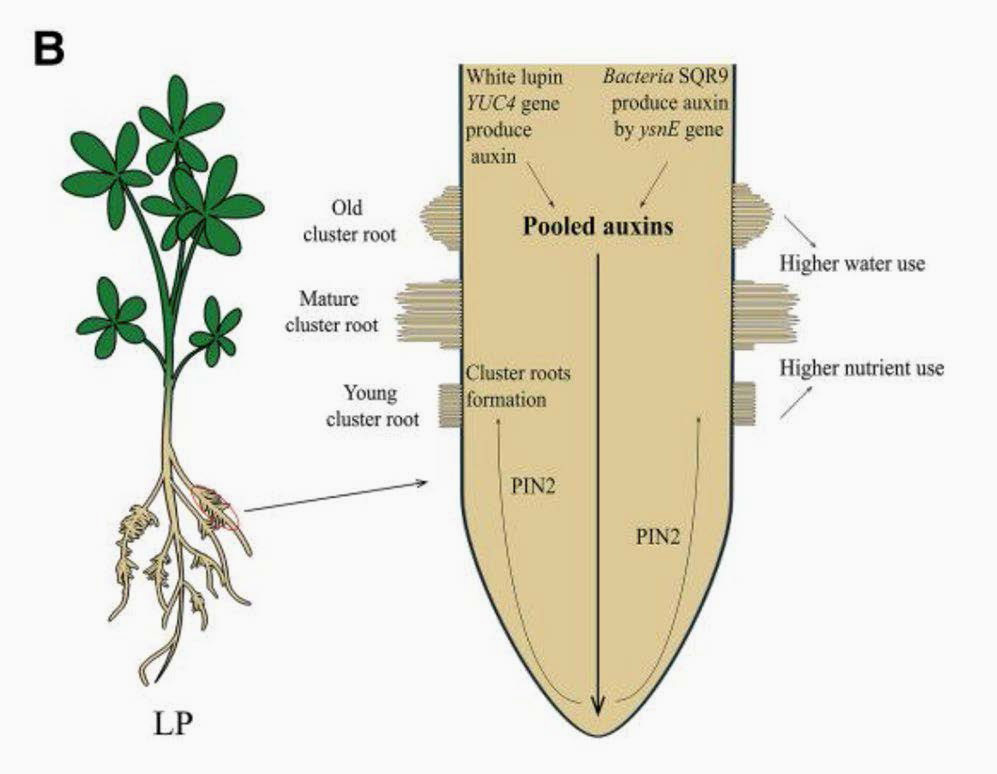
Phosphorus deficiency limits crop yields worldwide because most applied phosphorus becomes unavailable in the soil, making strategies that enhance plant phosphorus use efficiency essential for food security under SDG 2. This study shows that the plant growth-promoting bacterium Bacillus amyloliquefaciens SQR9 substantially increases cluster root formation in white lupin under low phosphorus conditions—a specialised root trait that mobilises and acquires otherwise inaccessible phosphorus. Mechanistically, SQR9 produces auxin via its ysnE pathway and elevates plant auxin biosynthesis and transport, with white lupin LaYUC4 and LaPIN2 required to pool and direct auxin to trigger cluster root development. The loss of bacterial ysnE or plant LaPIN2 disrupts this response, confirming the auxin-mediated bacteria-plant mechanism. By elucidating a tractable microbial-root signalling route to boost nutrient uptake under scarcity, this work supports sustainable intensification with reduced fertilizer dependence and more resilient production systems aligned with SDG 2.
The University’s Sustainable Procurement Policy is a key element of its sustainability efforts, focusing on minimising the environmental impact of procured products by evaluating their entire lifecycle—from raw materials and design to manufacturing, operation, maintenance and supply chain management.
Sustainable food policy
Aligned with the University’s commitment to sustainability, the Sustainable Food Policy promotes responsible sourcing and consumption of sustainable food products. Its goals include protecting ecosystems, preserving natural resources and maintaining biodiversity while minimising adverse impacts on climate change due to pollution.
Staff pantries and culinary options
Office pantries are established throughout the campus, providing staff with complimentary snacks and beverages. These areas serve as inviting spaces that promote social interaction and well-being, contributing to a supportive work environment. In addition, staff members can access a variety of catering venues on campus, promoting healthy eating and fulfilling culinary needs.
Staff surplus mooncake donation
In alignment with the University’s sustainability goals, the Human Resources Office continued its support for Feeding Hong Kong’s “Mooncake Madness” campaign. This initiative aimed to reduce food waste by encouraging staff to donate mooncakes after the festival, benefiting those experiencing food insecurity.
Staff activities on food waste education
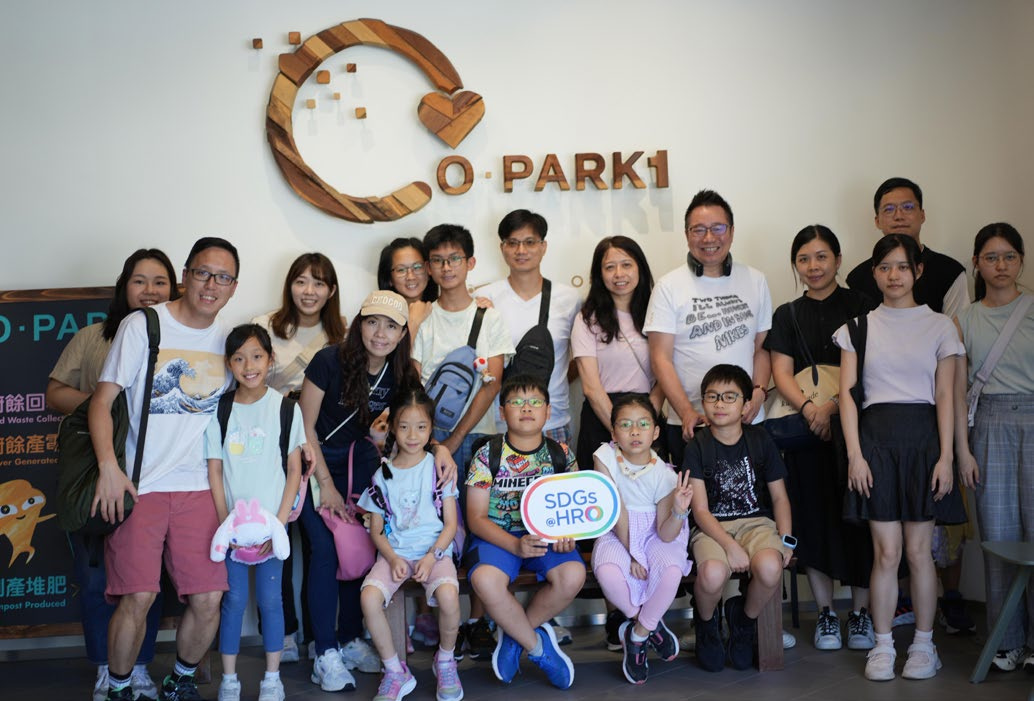
To raise awareness of food waste management, staff participated in an educational visit to O · PARK1 on Lantau Island. During this visit, participants learned about innovative waste-toenergy process and the importance of sustainable waste practices.
Campus food waste tracking
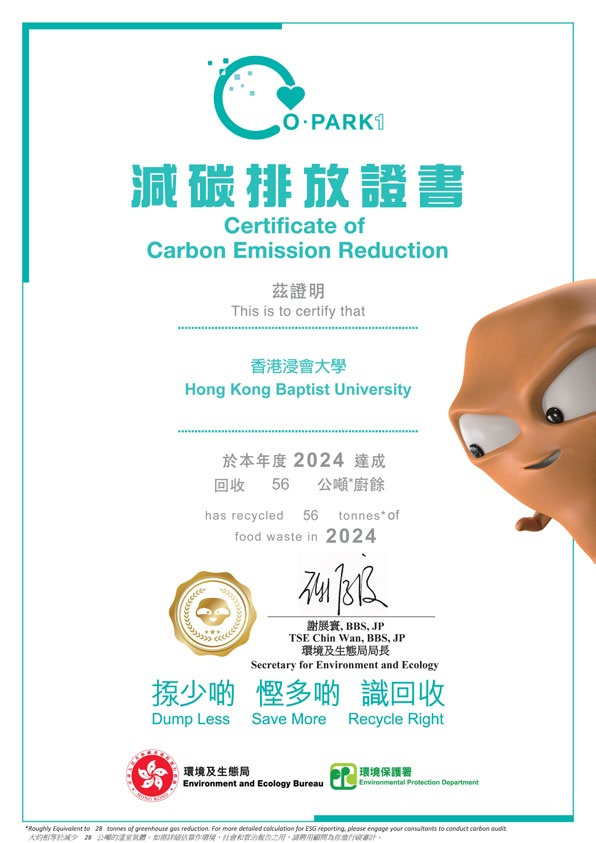
To proactively tackle food waste, the University participates in the Pilot Scheme on Food Waste Collection Services, facilitated by the Environmental Protection Department. From July 2024 to June 2025, approximately 62,000kg of food waste generated on campus was collected. This waste is sent to O · PARK1 in Hong Kong, where it undergoes anaerobic digestion to produce biogas for electricity, with the remaining digestate transformed into compost. Since May 2024, food waste collection bins have been piloted in selected office pantries across campus to encourage greater participation in recycling efforts. The outcomes of this programme will be regularly reviewed, with plans for expansion aimed at further engaging the University community in waste reduction initiatives.
Sustainable food choices on campus
At HKBU, various initiatives are in place to promote environmentally friendly eating habits among students and staff. Campus catering outlets offer vegetarian and halal options. For more information, please visit the HKBU Catering Services website.
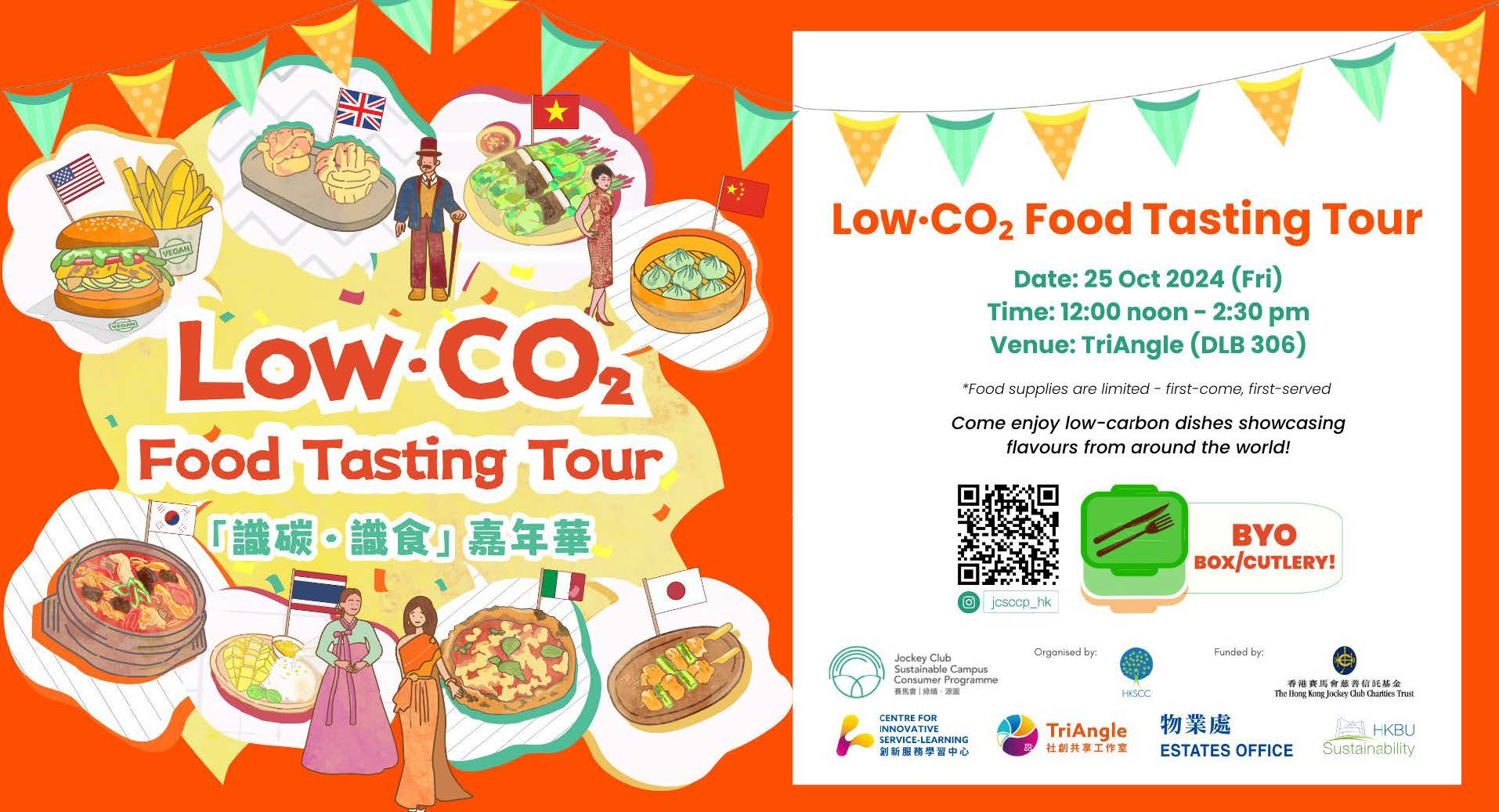
Low·CO₂ Food Tasting Tour
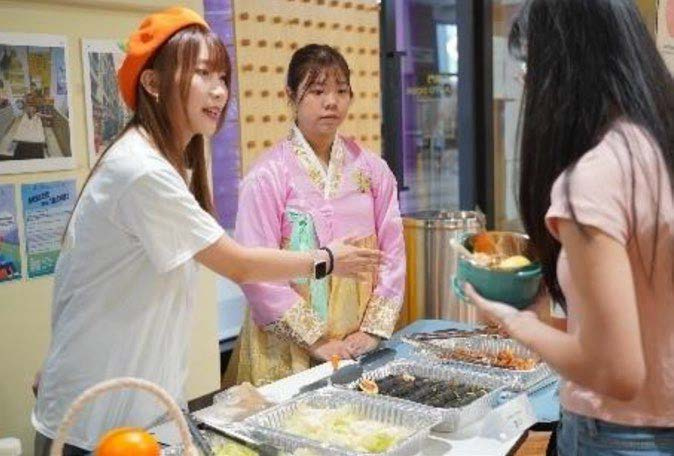
The tasting tour, held on campus on 25 October 2024, aimed to promote sustainable lower-carbon diet. The event featured engaging games and tasting of a variety of low-carbon dishes from local vendors and campus caterers. The event engaged over 300 students and staff, fostering community awareness around sustainable eating.
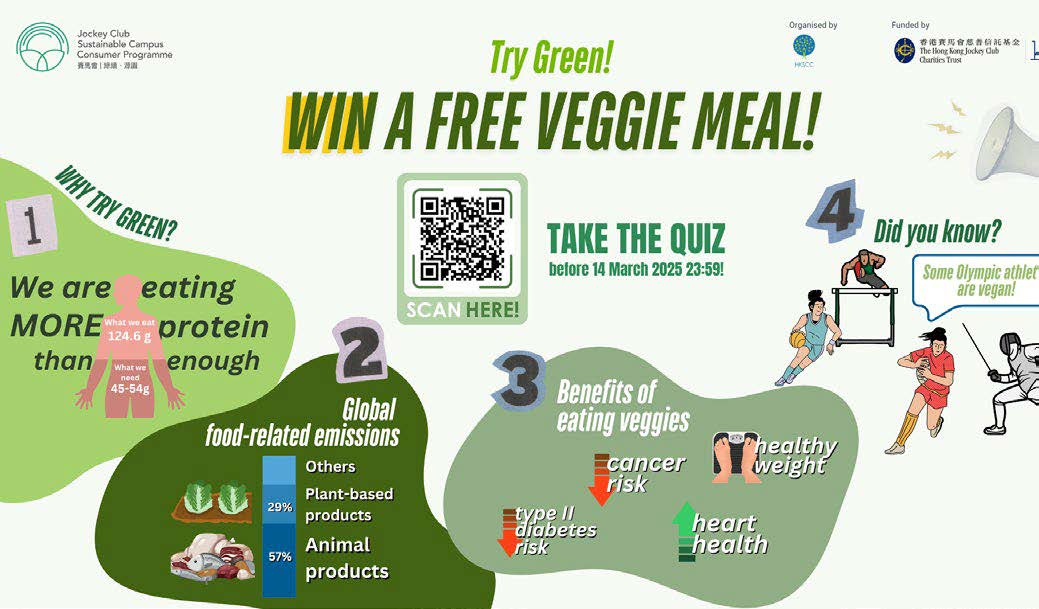
Try Green campaign
From March to April 2025, HKBU collaborated with the Jockey Club Sustainable Campus Consumer Programme to launch the Try Green campaign. This initiative encouraged plant-based eating and allowed participants to explore the health and environmental benefits of vegetarian diets. Participants could also win meal vouchers, promoting accessible sustainable food options on campus.
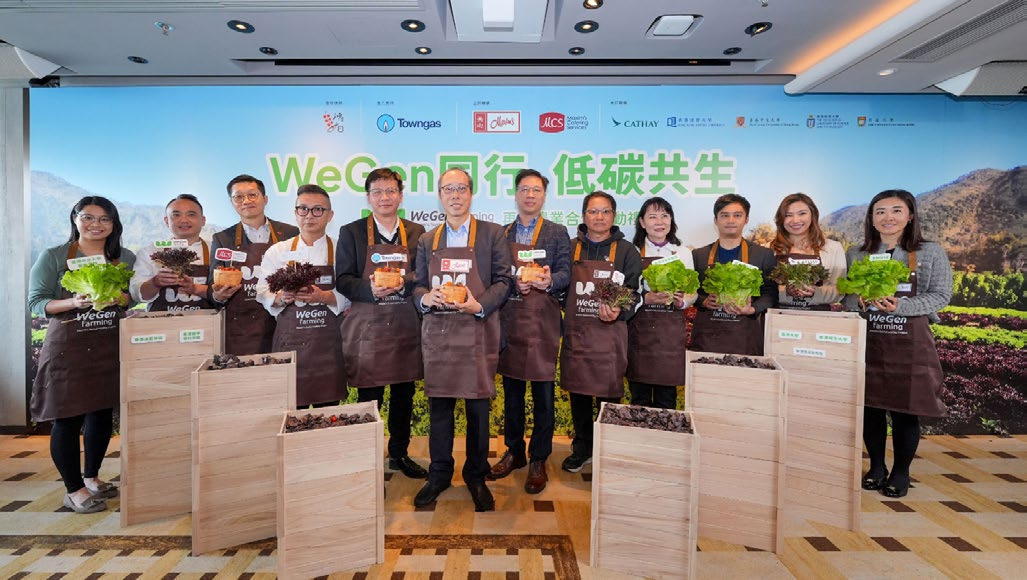
Healthy and affordable food choices
By offering a variety of options such as salads, fresh fruits, whole-grain sandwiches, and hot vegetarian dishes, our campus catering outlets help students maintain a balanced diet at an affordable price while also supporting their overall well-being. The “WeGen x Local Produce” menu was introduced at the Main Canteen in February 2025, bringing fresh and nutritious seasonal vegetables to the table, allowing students and staff to practice a low-carbon diet and support sustainable development on campus. HKBU’s support to this sustainability effort highlighted its commitment to offer healthy and affordable food choices on campus.
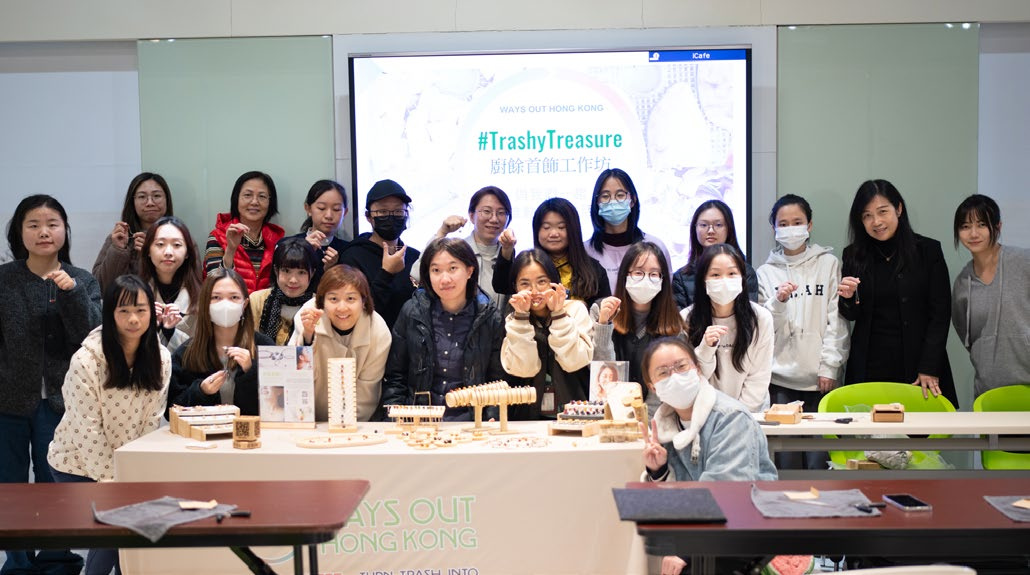
Promoting upcycling of food waste
Co-organised by the Jockey Club Sustainable Campus Consumer Programme, the Food Waste Bracelet Upcycling Workshop took place on 13 January 2025, attended by both students and staff. This co-curricular learning event, facilitated by Ways Out Hong Kong—a social enterprise dedicated to empowering young single mothers— focused on transforming fruit peels and vegetable scraps into jewellery, highlighting the importance of reducing food waste.
HKBU Sustainability Report 2024 - 2025